Bada Ganesh Mandir Ujjain – गणपत‍ि बप्‍पा का यह अनोखा मंद‍िर

Bada Ganesh Mandir Ujjain – गणपत‍ि बप्‍पा का यह अनोखा मंद‍िर

Bada Ganesh Mandir Ujjain - बड़ा गणेश मंदिर, गणपत‍ि बप्‍पा का यह अनोखा मंद‍िर, उज्जैन के लोकप्रिय भगवान गणेश के मंदिरों में से एक है। यह मंदिर उज्जैन जंक्शन से…
Bhojeshwar Temple | भोजेश्वर मंदिर – एक अधूरी पर भव्य संरचना

Bhojeshwar Temple | भोजेश्वर मंदिर – एक अधूरी पर भव्य संरचना

भोजपुर, जो भोपाल से लगभग 28 किलोमीटर दूर है, एक पुरातात्विक स्थल के रूप में प्रसिद्ध है और शानदार शिव मंदिर और साइक्लोपियन बांध खंडहर के लिए जाना जाता है।…

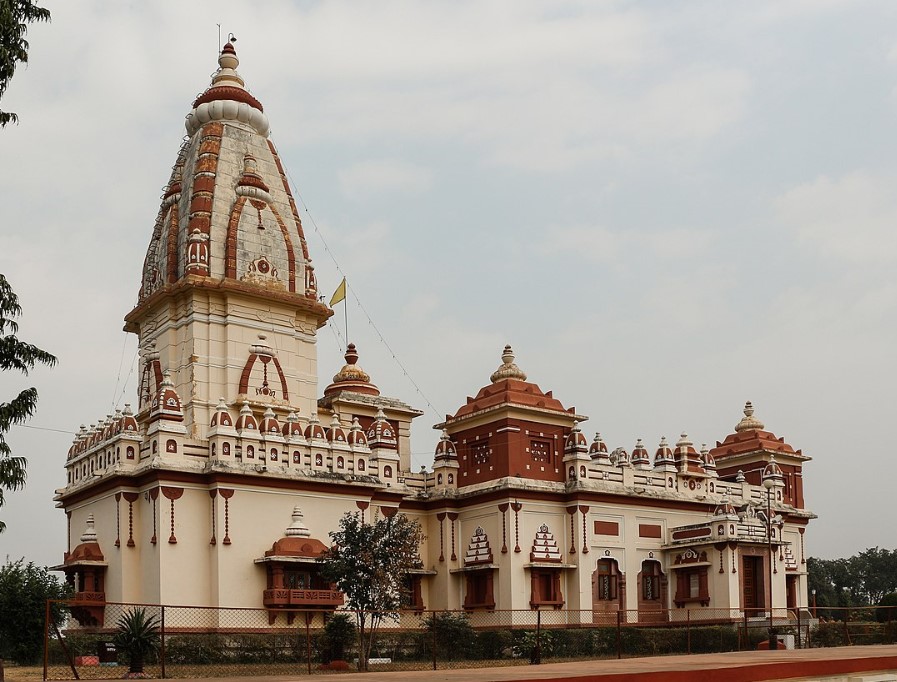
The Laxmi Narayan Temple Bhopal, perched atop Bhopal's Arera Hills, offers a breathtaking view of the city's past.

Who built Shri Laxmi Narayan Temple Bhopal ?

Known by another name, the Birla Mandir is dedicated to Ma Laxmi, the Goddess of Prosperity.

The well-known Birla family constructed and looks after the temple.

This house of worship, which is perched on a hill, offers a broad perspective over Bhopal's capital.

The Laxmi Narayan Temple Bhopal is one of the several Laxmi Narayan temples built by the Birla family in various cities.

Laxmi Narayan Temple Bhopal

Laxmi Narayan Temple Diety

The Laxmi Narayan Temple is dedicated to the Hindu goddess of wealth, Lakshmi, and her celestial spouse, Vishnu, who is also known as Narayana, the Preserver of the Universe.

The temple also houses Lord Shiva and his spouse, Parvathi.

Laxmi Narayan Temple Architecture

This temple, which has an obvious ancient charm and is surrounded by vegetation, is still a popular destination in Bhopal.

The temple's architecture exudes an aura of antiquity and has a yellowish-sand hue.

The stunning white marble stone that encircles the entire shrine adds to its opulent atmosphere.

The building's facade is a huge turret, and the compound is surrounded on other sides by expansive lawns.

This shrine is accessible through a magnificent archway. In addition to spiritual seekers, Bhopal locals regularly visit this shrine.

A museum is also located in the complex.

The sacred site is made more beautiful by the contiguous greenery of the winding lawns and its old-world charm.

The temple is visited by devotees seeking the blessings of the goddess Lakshmi. The temple's magnificent cloisters at the entrance add to its architectural magnificence.

The temple features a large steeple on one side. The Laxmi Narayan Temple, also known as the Birla Temple, is accessible by a stunning arch surrounded by verdant meadows.

In addition, there is a magnificent statue of Shiva and Parvati in a reclining position at this sacred site.

A stunning view of the city can be seen from the Vaishnavite temple. The serene atmosphere of this magnificent house of worship provides devoted comfort to the followers.

Other Information

Lakshmi Narayan Temple Address: Arera Hills , Bhopal , Madhya Pradesh , 462011 , India
Lakshmi Narayan Temple Contact Number: +91-9039633192
Lakshmi Narayan Temple Timing: 06:00 am - 08:00 pm
Best time to visit Lakshmi Narayan Temple(preferred time): 07:00 am - 06:00 pm
Time required to visit Lakshmi Narayan Temple: 00:40 Mins


You may also like: Jatashankar Mandir – Jatashankar pachmarhi madhya pradesh

https://mytempletrips.in/jatashankar-mandir-jatashankar-pachmarhi-madhya-pradesh/
Laxmi Narayan Temple Bhopal

Sant Kamali Hanuman Mandir is an old Hanuman Temple located in the Hanuman Ganj neighbourhood of Bhopal, Madhya Pradesh.

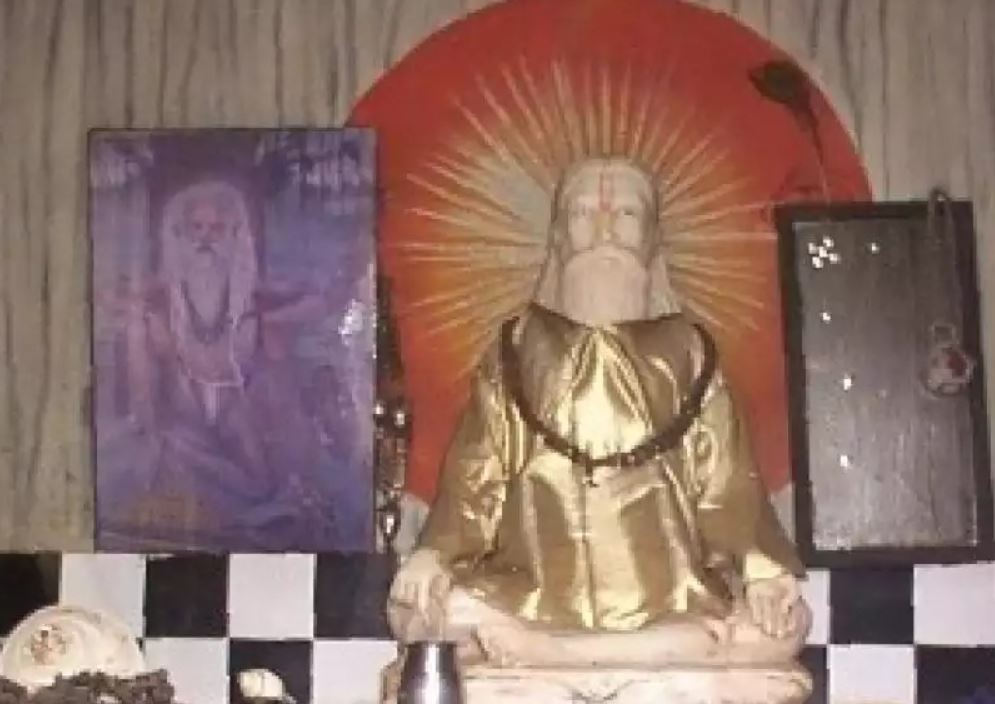
Sant Kamali, was a devotee of Lord Hanuman and estabished this temple.

During his lifetime, Sant Kamali is claimed to have accomplished countless miracles.

The temple was constructed in the nineteenth century.

Legend of Sant Kamali Hanuman Mandir

According to legend, Sant Kamali used to blow conch in the early morning hours as part of his devotion to Lord Hanuman beneath a peepal tree in the shrine's current site.

Begum Khurishia, the then-ruler of Bhopal, was offended.

She told the Sant not to blow the conch in the early morning hours. Sant, on the other hand, did not stop blowing the conch.

Begum Khurishia sentenced the Sant to death. When the soldiers arrived at the peepal tree, they discovered the Sant had died.

The conch sound was heard again the next morning. Begum Khurishia ordered his soldiers to behead the Sant and cut off his hands and legs this time.

When the soldiers arrived to the peepal tree, they discovered Sant decapitated, with his legs and hands severed.

The conch sound was heard again the next morning. Begum Khurishia went to examine the mystery herself. She heard the conch sound but did not see Sant Kamali.

She realised the Sant's greatness. Soon after, the Sant appeared and told her that he would continue to do his pujas and ceremonies.

The queen, impressed by his piety, granted him land on which to construct a Hanuman mandir.

So during the reign of Begum Khurishia ,Sant Kamali was donated eight acres of land for construction of the temple.

It all started when the Begum misplaced her beloved necklace, and despite extensive searching throughout the Mahal, there was no evidence of it whatsoever. She approached Sant Kamali Maharaj on the spur of the moment to help her trace her jewellery.

When she went to him for the same, Sant told her, without saying anything, why she had gone to the trouble of coming up here when she should have recovered the necklace wrapped in a red cloth in her under bed.

Begum was perplexed as to how the Sant could know why she had approached him. She directed her trusted commandant to review and double-check the bedroom.

The commandant returned with the jewellery wrapped in red linen, telling Begum that he discovered it under the bed, buried between blankets.

Impressed, Begum Khurishia gave eight acres of land and requested that her army assist in the construction of the temple as requested by Sant Kamali Maharaj.

This entire area became known as Hanumanganj because of Sant Kamali and the temple he constructed for Lord Hanuman. T

his kshethra is so sacred that it makes one feel blessed to have visited the location where Sant conducted pooja and nama sankeerthan to Lord Hanuman.

The temple was established on the site where Sant Kamali Maharaj worshipped Lord Hanuman.

The temple faces south, and there are currently three-ardh shila adorning the temple, all of which face south.

The temple is a sight to behold, with three ardh shilas, one of which is around nine feet tall, another approximately three feet tall, and the third approximately two feet tall.

In the temple complex, there is a statue of Sant Kamali. The conch he blew can be seen in the shrine.


You will also like: Hanuman jayanti wishes in hindi 

https://mytempletrips.in/hanuman-jayanti-wishes-in-hindi/#more-13519
Sant Kamali Hanuman Mandir Bhopal – The mystic powers of a saint

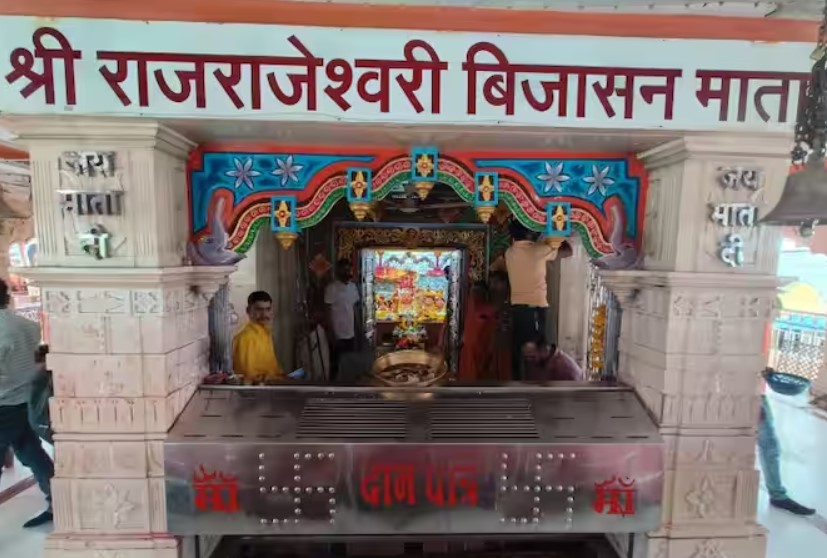
Bijasan temple Indore is a Hindu Goddess Durga temple located in the Indore District of Madhya Pradesh.

A hillock (tekri) has a small temple of Bijasen Mata. Mela is held here during Navaratri. This hill offers panoramic views of the sunset and of the city at night.

The Holkars' guest home, perched on top of the hill, has been turned into a Border Security Force Arms Museum.

The surrounding land is being transformed into gardens, complete with a small lake. Ma Bijasan is a Hindu Gadariya (Kukroliya parivar) Kuldevi.

Bijasan temple Indore - An ancient temple in the heart of the city of Indore

Festivals celebarted at the Bijasan temple Indore

Every year during Navratri, a mela is held. at Bijasan temple Indore. The Goddess is thought to be extremely strong and capable of performing instant miracles.

The blind are said to be able to restore their sight through the mother's grace.

People with various types of requests come to the Goddess and have their wants granted because to their tremendous confidence in the Goddess's powers.

Bijasan temple Indore - An ancient temple in the heart of the city of Indore

This temple on a hill commands a stunning view of the surrounding area.

Shivaji Rao Holkar constructed this temple in 1760. Thousands of devotees visit this temple during Navaratri.

His unwavering devotion to the Goddess appeased her, and she appeared before him.

Bijasan temple Indore story

Beejasan Mata (Mother Goddess Durga) is seated on the demon Rakta Beeja in this idol.

The tremendous accomplishments of Goddess Durga, now known as Shri Durga Shaptasati, are recounted in Markendeya Puran.

Bijasan temple Indore - An ancient temple in the heart of the city of Indore

In the eighth chapter of Shri Durga Shaptasati, we learn about Durga's Chivalrous form when she fought the demon Rakta Beeja.

This demon was endowed with an incredible boon.

Every drop of his blood that fell from his body on Earth would transform into a Rakta Beeja of equal power and prowess.

As a result, there were millions of Rakta Beeja demons. Finally, the Goddess chose not to let the devils' blood fall on Earth.

As a result, she either burned the wounds or gathered the falling blood in a dish and consumed it. The deity took on as many guises as the demon Rakta Beeja. Thus, the Goddess subdued and killed the demon Rakta Beeja, earning her the moniker Beejasan.

You may also like: SundarNarayan Temple Panchavati at Nashik in Maharashtra

https://mytempletrips.in/sundarnarayan-temple-panchavati-at-nashik-in-maharashtra/
Bijasan temple Indore – An ancient temple in the heart of the city of Indore

Temple of Shri Shyam Kaka Rajgarh is a Hindu temple dedicated to Krishna (also known as Shyam). It was built in 1845 A.D. at Shaka Jagir village, Rajgarh district, Madhya Pradesh. It is located near Narsinghgarh, around 100 kilometres from Bhopal.

Though it is a temple of God Krishna, there is a panel in the temple depicting six Muslim men dressed in long robes and traditional headgear. According to author Shalini Rai Narayan, it is the one of the exceptional places, where religious beliefs and antagonistic holy men stood in solidarity.

Popularity of Shri Shyam Kaka

People go to shri Shyam Kaka Temple Rajgarh, to solve their domestic Issues, fulfill Wishes and for prosperity.

Krishna Jayanti is celebrated every year and is one of the most prominent festivals celebrated there.

The temple has been declared a protected site by the Archaeological Survey of India

Legend of shri Shyam Kaka Temple Rajgarh

According to folklore, local ruler Shyam Dev Khinchi's wife Bhagali Devi fled the palace after falling out with him and sought refuge with Amara Singh Gurjar, a local chieftain.

When Shyam dev was killed in a battle, the queen directed the construction of the Lord Krishna temple in his honour, and Amara Singh Gurjar was selected as the shrine's chief priest.

Since then, the Gurjars have claimed to be the temple priests.

How to reach the temple?

Google Maps link: https://goo.gl/maps/UWTppjRgJSyUXy5T6

Shyam Kaka Temple Rajgarh – Madhya Pradesh – A temple dating back to 1845 A.D

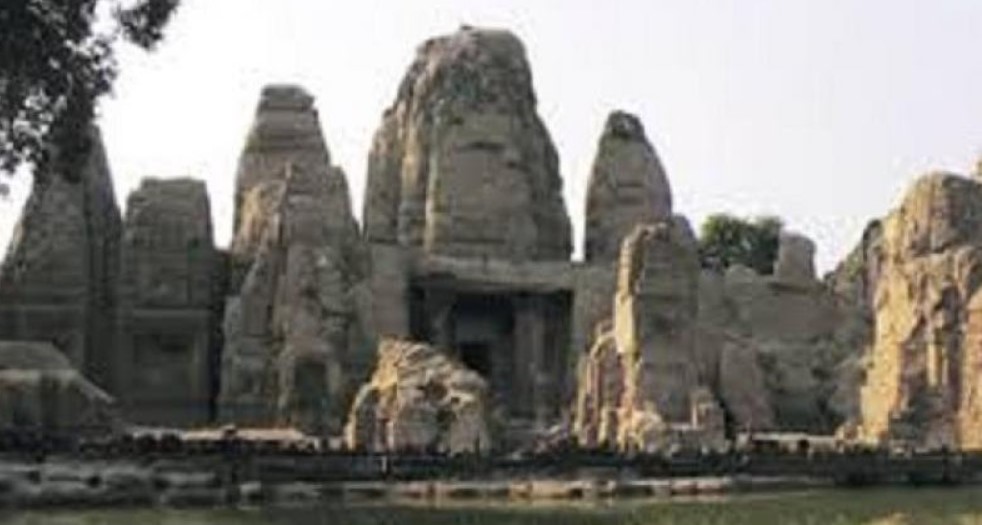
The Devi Jagadambi Temple Khajuraho is dedicated to Devi Jagadambi and is located in Khajuraho, Madhya Pradesh.

The temple, along with the other temples at Khajuraho, was designated a World Heritage Site due to its remarkable architecture, art, and historical significance.

The temples of Khajuraho were built during the 10th and 12th century by the emperors of the Chandela dynasty.

Devi Jagadambi Temple Khajuraho

The Devi Jagadambika temple, located in a group to the north, is one of Khajuraho's most ornately decorated temples.

It is named after Jagadambika, a Hindu goddess associated with devi. The body of the temple is encircled by three bands of sculptures.

The sanctum contains a massive picture of the Goddess (Ma Parvati).

About Devi Jagadambi Temple Khajuraho

This temple is fundamentally similar to the Chitragupta Temple in terms of architecture, proportions, and decorative scheme, and the two temples are thus fairly near in both time and space.

It has a sanctum without an ambulatory, a vestibule, a'maha-mandapa' with lateral transepts, and an entrance porch.

The garbha griha today contains a massive figure of the Goddess (Ma Parvati) of the Universe (hence called as Ma Jagdamba).

Devi Jagadambi Temple Khajuraho

It is surrounded by three bands of sculptures, the third and highest of which features some of the most sensual sculptures in Khajuraho.

This temple is significantly smaller than the famous Kandariya Mahadev Temple.

It has a cross plan, one pair of balconies, one mandap, and no inner pradakshina patha.

The Devi Jagdambi Temple, on the other hand, features some of the most beautiful sculptures in Khajuraho, and because of its medium height, most of them are plainly visible.

There are exquisite representations of the dlihpolas in their proper placements, particularly the magnificent Yama and Nirriti on the south and southwest sides.

Endearing representations of Vishnu, Shiva, and Brahma embracing their consorts are found in the small recesses on the south, west, and north sides.

Varaha, represented with a human body and a boar head, emerges from the primordial seas with the earth goddess Bhudevi on his arm in the south side lower niche.


Distance (From Khajuraho Bus Stand): 1 Kms

Devi Jagadambi Temple Khajuraho timinhs

Temple open Timings: 6 AM - 5 PM

Devi Jagadambi Temple Entry fee

Complex Entry Fee: Rs. 30 for Indians, Rs. 500 for Foreigners

Devi Jagadambi Temple Khajuraho
Panch Mata Mandir Jabalpur

Panch Mata Mandir Jabalpur | पचमठा मंदिर जबलपुर – Madhya Pradesh

दोस्तों हमारे देश में कई प्राचीन मंदिर स्थित है। और लगभग हर प्राचिन मंदिर से कोई ना कोई चमत्कार जुड़ा है। दोसतों ऐसे ही एक मंदिर के बारे में आज…

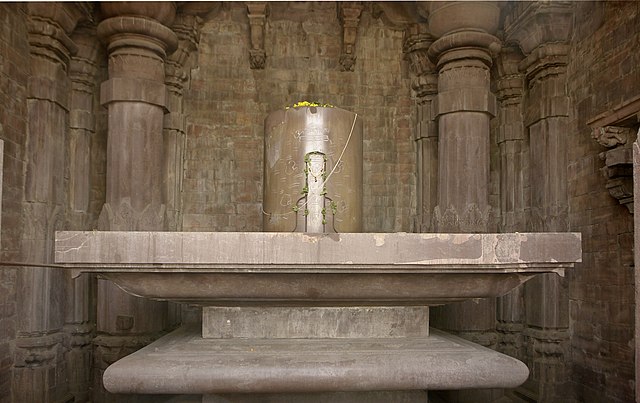
Bhojpur, which is around 28 kilometres from Bhopal, is well-known as an archaeological site and is known for the spectacular Shiva Temple and Cyclopean Dam ruins. The Shiva Temple, also known as the Bhojeshwar Temple, has acquired the name as "Somnath of the East."

It is said that the Bhojeshwar temple was founded by the Parmar king of Dhar, Shri Raja Bhoj (1010-53) and was named after him.

Dedicated to Lord Shiva , it is said to have a 7.5ft high Shiva Linga.

image courtesy: wikipedia

The Paramara king Bhoj is thought to have initiated the temple's construction in the eleventh century. The building construction was abandoned for an unidentified reason. The architectural designs are inscribed on the nearby rocks. Scholars have been able to better grasp the 11th-century India's temple construction methods because to the incomplete materials left at the site, the architectural designs cut into the rocks, and the masonry marks.

The Archaeological Survey of India has recognised the temple as a Monument of National Importance (ASI).

Although the temple is incomplete, the temple has a spectacular rising strength of line and is supported by four pillars. It is a simple square with an outside area of 66 feet.

The pillars, like the dome, are huge, but their tapering form gives them a unique grace. A 24-faced segment emerges from the lowest of the three divisions, an octagon with 2.12 feet of facets.

The two superbly sculpted figures that stand on either side of the doorway are in strong contrast to the doorway, which is elaborately carved from above and plain from below. The three other sides are balconies, each supported by four ornately carved pillars and large brackets.

image source - wikipedia

The sanctum's lingam rises to an impressive height of 7.5 feet and measures 17.8 feet in circumference. The architectural harmony of the lingam and platform produces a wonderful combination of strength and lightness.

The platform is a gigantic 21.5 feet square platform built of three layered limestone slabs. The earthen ramp that was used to raise the temple to dome level still stands since it was never finished for an unknown reason.

If it had been finished, it unquestionably would have been a work of art unique to its kind and without precedent anywhere in the world.

The temple stands as one of the finest examples of temple architecture of the12th and 13th century.

A Jain shrine that is near to the Bhojeshwar temple is also unfinished and has a similar stone raising ramp. One 20-foot-tall enormous statue in this shrine houses three images of the tirthankaras: one of Mahavira and two of Parsvanath.

There was once a sizable lake west of Bhojpur, but all that is left today are the remnants of the majestic old dams that kept its water in. The location was carefully chosen since, with the exception of two gaps, a natural wall of hills surrounded the entire area. A 250 square mile area of water was supported by the embankments.

This great work is ascribed to Raja Bhoj, but it may possible be of an earlier date.

How to reach Bhojeshwar temple?

  • How to reach bhojeshwar temple from Bhopal ? The temple is around 30 Kms from Bhopal,
  • Bhopal Raja Bhoj airport offers pre-paid taxi services to the Bhojpur temple.
  • Pendra Road, located 17 kilometres from the centre of the city, is the closest railhead to Amarkantak. Amarkantak is 48 kilometres away from Anuppur, which is extremely convenient for travellers.
  • From Pendra Road, taxi fares are Rs 300; from Anuppur, they are Rs 600.
  • There are buses operated by the government that depart from Pendra Road, Shahdol, and Bilaspur. Buses connect Amarkantak with Jabalpur (245 kilometres), Rewa (261 kilometres), and Shahdol (67 km).
Bhojeshwar temple Bhopal – The unfinished Marvel!

Bada Ganesh Mandir Ujjain is one of the most popular lord Ganesha temples in Ujjain, located just about 2.5 Kms from Ujjain Junction.

So if you are on Ujjain Temple visit, Situated near the Mahakaleshwar Temple, it is one of the sacred temples to visit.

Lord Ganesh is the son of Ma Parvati and Lord Shiva and is one of the most worshipped deity in India.

Lord Ganesh is regarded as the most beneficent God, bestowing wealth and success upon his devotees.

He has a very charming physique and an elephant's tusk, and he is Parvati's (or Goddess Durga's) favourite son.

Bade Ganeshji Ka Mandir

It is located very near the Shri MahaKaleshwar Temple.

Bade in Hindi means big or large, and Mandir in Hindi means a temple. So this temple has a huge Lord Ganesha idol , probably one of the largest Lord Ganeshas idol.

The Bade Ganeshji Ka Mandir is situated near the reservoir of the Shri MahaKaleshwar Temple and is a must visit in Ujjain.

History of Bada Ganesh Mandir Ujjain

It is said that this Ganesh idol was established by Maharishi Guru Maharaj Siddhant Vagesh Pt. Narayan Ji Vyas

The Bade Ganesh Ji ka Mandir's Ganesh idol is roughly 18 feet tall and 10 feet broad, with Lord Ganesh's trunk pointing clockwise.

On the head of the statue is a trident and a swastika. A Ladoo is pressed into the right side of the trunk. Lord Ganesh wears a garland around his neck and has enormous ears.

The middle of the temple gate at Bade Ganeshji Ka Mandir is adorned with a Panchamukhi image of Lord Hanuman. In Hindi, Panchamukhi means Five Faced. Hanuman is supposed to impart strength and power to his followers.

Being the most benevolent God, Lord Ganesha, blesses his followers with Health, Wealth and Prosperity.

Today, the temple is also a popular training center for imparting education on astrology and the Sanskrit language.

Bada Ganesh Mandir Ujjain temple timings

Monday 5 AM - 12 PM & 4 PM - 8 PM
Tuesday 5 AM - 12 PM & 4 PM - 8 PM
Wednesday 5 AM - 12 PM & 4 PM - 8 PM
Thursday 5 AM - 12 PM & 4 PM - 8 PM
Friday 5 AM - 12 PM & 4 PM - 8 PM
Saturday 5 AM - 12 PM & 4 PM - 8 PM
Sunday 5 AM - 12 PM & 4 PM - 8 PM

This city of Ujjain had once been one of the greatest cities of India. The city of Ujjain is often called the city of the temple as it is home to many temples, and religious sites.

So do visit this temple if you are on a trip to Ujjain and take the blessings of Lord Ganesha!

You may also like: 108 Names of Ganesha – Bhagwan Ganesh ji ke 108 Naam ( with meaning – in hindi & english )

https://mytempletrips.in/108-names-of-ganesha/
Bada Ganesh Mandir Ujjain – One of the largest Lord Ganesha idol.

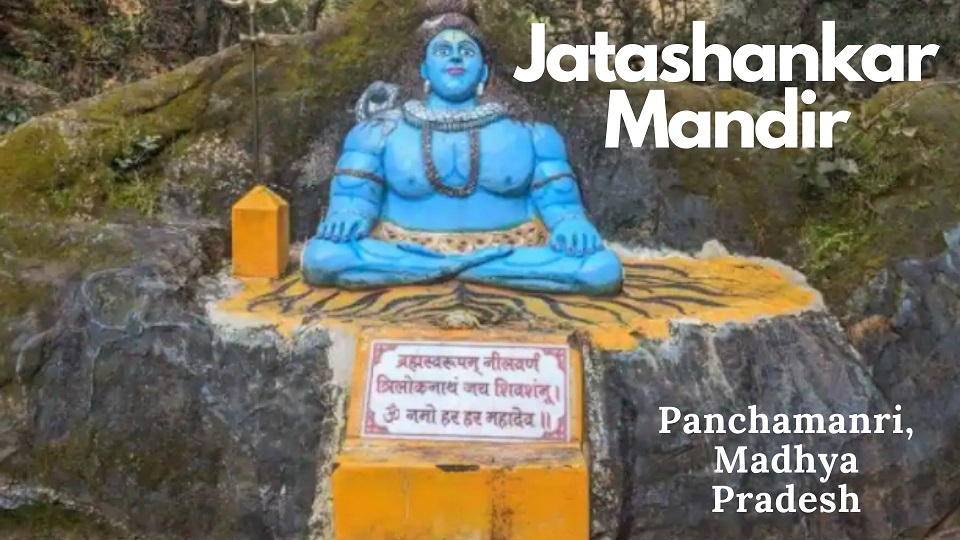
Jatashankar Mandir - Jatashankar is a natural cave and Hindu shrine in the Hoshangabad district of Madhya Pradesh, India, located north of Pachmarhi.

The cave is nestled in a deep gully with massive boulders jutting out above it. Stalagmites revered as organically created lingams can be found in the cave.

Jatashankar Cave is a prominent pilgrimage site that serves as a shrine to the Hindu god Shiva. Shankar is another name for Lord Shiva, while Jata signifies hair.

There are two sorts of ponds in the area, one with cold water and the other with hot water, both fed by springs.

There are 108 Shiva lingams spontaneously formed inside the cave. The cave's water originates from an unknown source, as no one has ever seen or accessed it.

The Gupt Ganga is the name given to this stream of water. The Jambu Dwip stream is thought to have its origins in a cave. Lord Shankar, Goddess Parvati, and the Shiva lingam are housed on a platform in the cave's upper level.

Legend of Jatashankar Mandir pachmarhi madhya pradesh

The legend goes that the Bhasmasur was a devotee of Shiva and wanted to get a special ability – to turn anyone in ashes by touching the head of the victim by hand.

After long entreating Shiva agreed. But now the former devotee turned into the enemy – Bhasmasur wanted to test this ability on Shiva first. Shiva escaped through a tunnel from Tilak Sindur and finally reached remote cave – Jata Shankar. While running through the cave, he lost his hair.

Jatashankar Temple Timings

The Jatashankar Temple is open on all seven days and is open from 7 A.M. to 7 P.M.

The temple is open through out the year and is open even on holidays

What are the Festivals celebrated at the Jatashankar Temple

The most important event observed in Jatashankar Mandir is Maha Shivaratri. Pilgrims from all over India come on this day to perform pooja and seek the Almighty's blessings.

It is mainly celebrated in the months of February or March, when people fast and celebrate the event with tremendous zeal.

In the hill station of Pachmarhi, there is an annual fair held around the Shivaratri festival. This fair attracts a large population who come to seek Lord Shiva's blessings.

Jatashankar Mandir Address

Address : Jatashankar Rd, Pachmarhi, Madhya Pradesh 461881

How to reach Jatashankar Mandir

By Train: 51.7 KM away from Pipariya Railway Station
By Air: 221 KM away from Raja Bhoj Airport

Railway Address :Pipariya Railway Station, Madhya Pradesh State Highway 19, Pipariya, Madhya Pradesh 461775
Airport Address :Raja Bhoj Airport, Airport Rd, Gandhi Nagar, Bhopal, Madhya Pradesh 462036


You may also like: The Hadimba Devi Temple, Manali – A temple from Mahabharata times

https://mytempletrips.in/the-hadimba-devi-temple-manali-a-temple-from-mahabharata-times/
Jatashankar Mandir – Jatashankar pachmarhi madhya pradesh