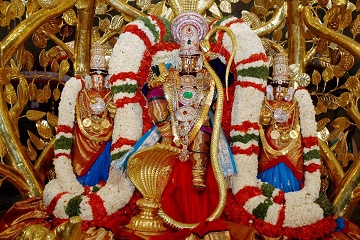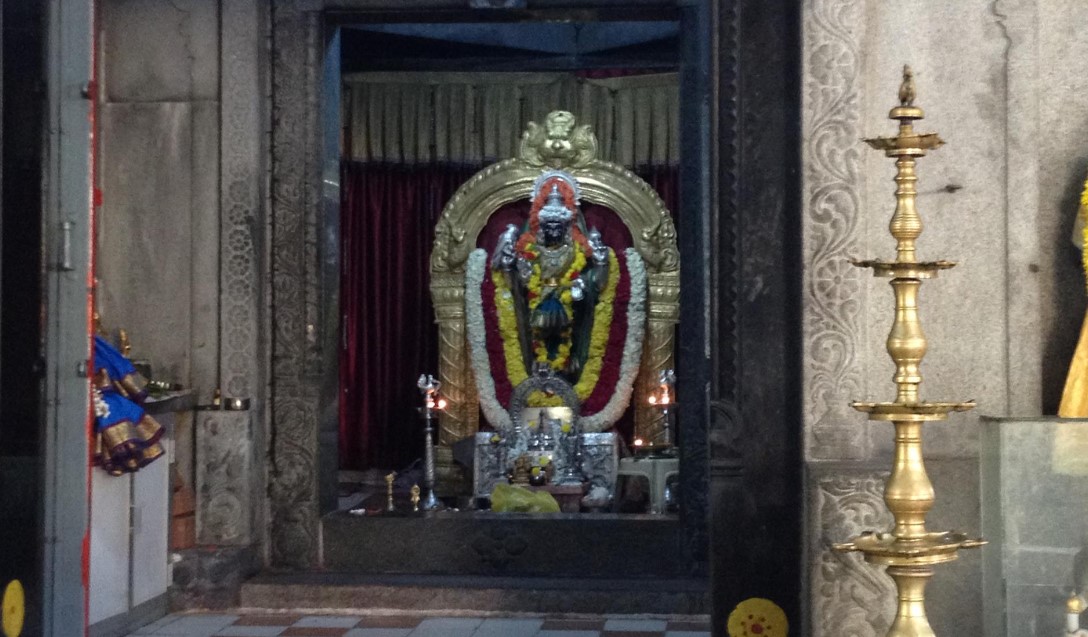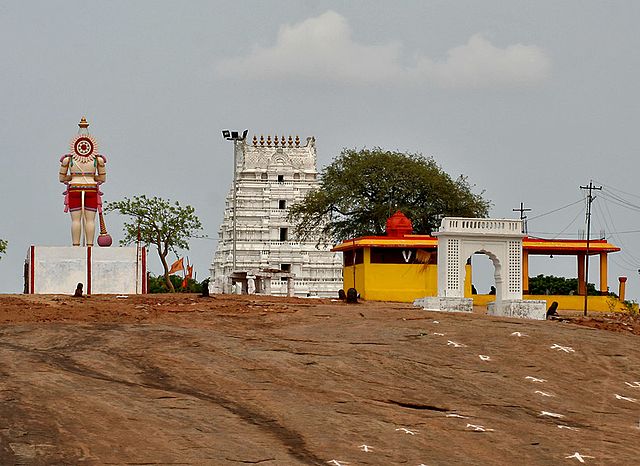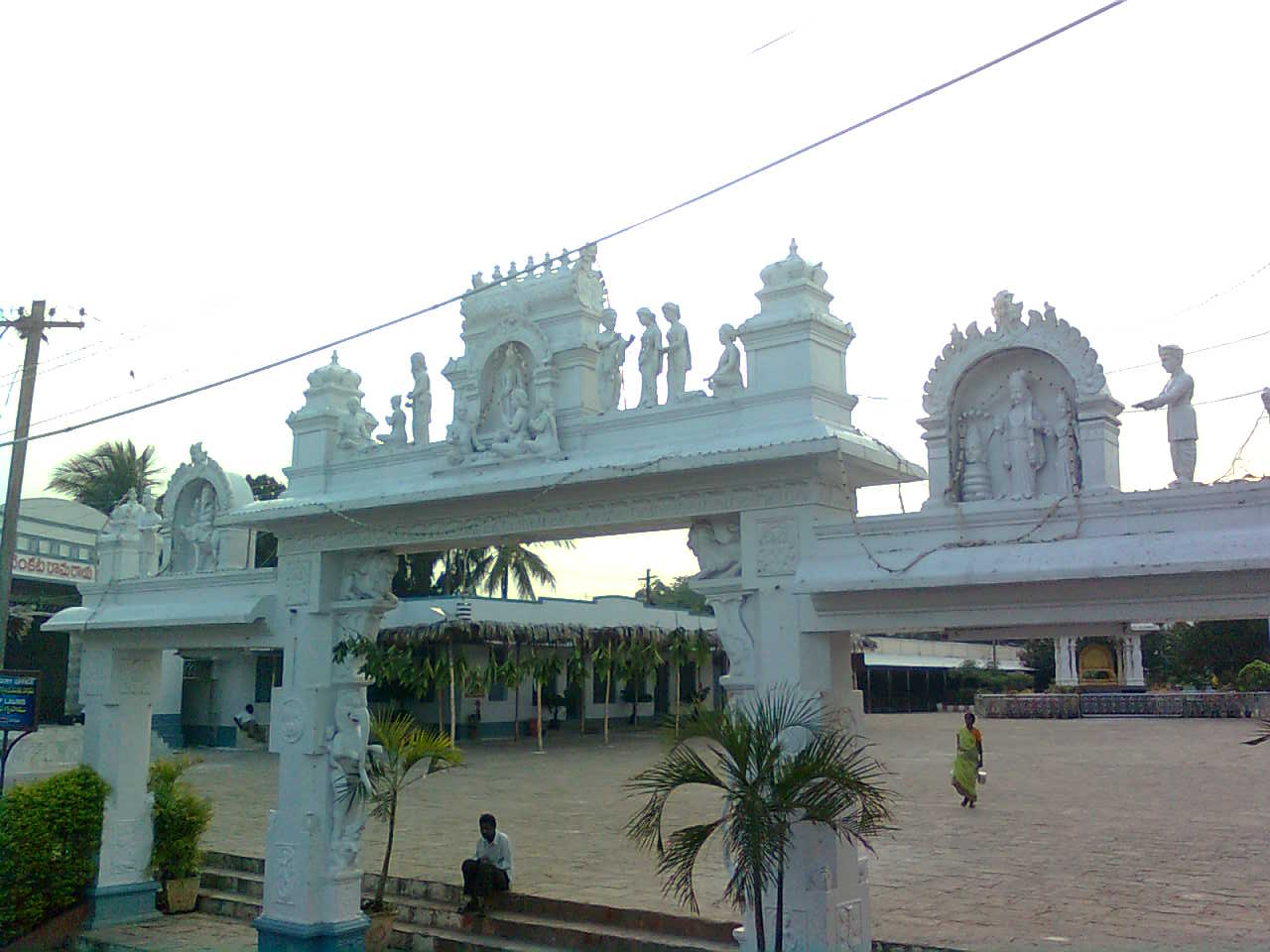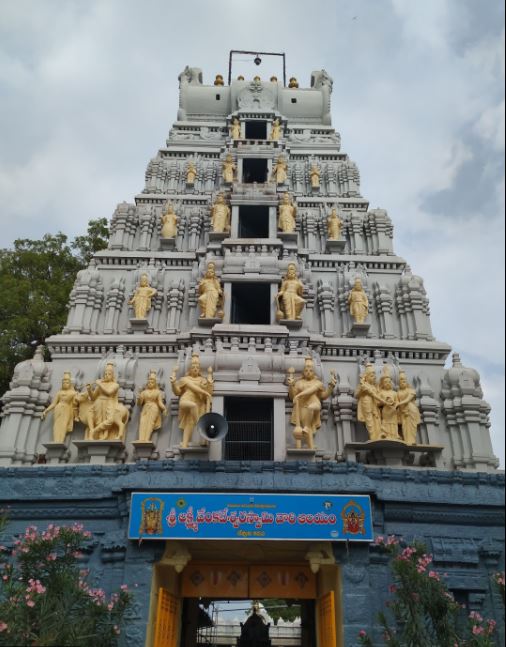
Penugonda Vasavi Temple also known as Shri Vasavi  Kanyaka Parameshwari located at Penugonda in Andhra Pradesh and is the family deity or ‘kula devatha’  of the Arya Vysya community ( as mentioned in the Vasavi Puranam ).

About Penugonda Vasavi Temple

Because Penugonda is the birthplace of "Vasavi Matha," the temple is known as the Penugonda Vasavi Kanyaka Parameswari temple of Shri Vasavi Kanyaka Parameshwari, the sacred goddess of Vysyas.

Penugonda Vasavi Temple

The sacred Penugonda Vasavi Temple, appears in a number of ancient religious scriptures. Vasavi Kanyaka Paratneswariwas was noted for her beauty, according to mythology.

Sri Nagareswaraswamy, Mother Kanyakaparameswari, and Mahishasuramardini are enshrined in the holy temple.

The temple was created in strict compliance with vastu sastra, therefore it has strong prakars, tall gopuras, huge courtyards, multiple minishrines, vast garbagrihas, grand mukhamandapas, and so on.

It faces east, and a lofty tower atop the vast mahadwara lures tourists with exquisite sculptural pieces adorning it from top to bottom and on all four sides.

In front of it is a large courtyard with many buildings containing the office, poultry, and staff quarters.

There are various mandapams in the second Prakara with charming deities such as Vinayaka, Navagrahas, Lord Venkateswara, and Kaala Bhairava, as well as finely sculpted colourful sculptures of Mother Kanyakaparameswari standing in a fire pit with her parents by her side and a gorgeous mirror house.

Nagareswaraswamy's garbha griha is quite spacious, and its spick and span, along with the elevated vedh for the lingam in the centre, is masterfully conceived and elegantly implemented.

The towering Shiva linga, which is mounted on a large, tall platform and is decorated with colourful garlands and triple lines set with diamonds, is so alluring that when devotees first catch sight of it, they immediately lift their hands in adoration.

The two other garbha grihas, Mahishasuramardhini and Vasavamba, are magnificent and mesmerise the admirers with their sparkling jewels and vibrant attire.

A single darsan makes a lasting effect on the devotees' minds and beckons them back time and time again.

Sri Vasavi Kanyaka Parameswari Temple History

Penugonda Vasavi Temple, which is located in Penugonda, a town in the West Godavari District of Andhra Pradesh, is one of the numerous temples in South India's Treasure House.

The temple has an impressive seven story, multicoloured (Gali Gopuram) tower with lovely architecture. This Penugonda Kshetram is revered by Vysyas and is known as the "Kasi of Vysyas."

Kusuma Sresti or Setty was the Setty king of Vysyas and was known as Pedda Setty (Elder among Settys) . His territory was a Vassal state of Vangi Desa (Vanga Kingdom). Vangi was ruled by Vishnu Vardhana (Vimaladitya Maharaja).

During the 10th and 11th centuries A.D., Penugonda (Jestasailam) city served as the capital for all 18 paraganas rules by Vishnu Vardhana.

Kusuma Sresti and his wife Kusumamba worshipped Lord Siva (Nageswara Swamy).

Despite being married for a long time, the pair did not enjoy peace of mind because there was no heir to the throne. They did not had any children.

So they were grieved because their numerous prayers and sacrifices had been ineffective.

They went to their Kula guru, Bhaskara Acharya, who was also a Komati and was respected as a Komati Brahman because of his knowledge of the shastras.

He suggested that they carry out the Puthra Kamesti Yaga that Dasharatha had done.

So they started the yagna. The Gods were pleased and sent prasadam—blessings from the gods—through the fire God Yagneswara.

They consumed the Prasadam with devotion, and a few days later Kusumamba's pregnancy symptoms were discovered.

She revealed strange wishes that suggested she would have children who would battle for the well-being of everyone.

There was joy everywhere in the springtime. In the middle of this natural splendour, Kusumamba gave birth to twins on Friday, the 10th of the Telugu month of Vaisaka, at dusk, at the time of the convergence of Kanya and Uttara Nakshatram (Virgo).

One twin was a boy and the other a girl. The female child's name was Vasavamba, and the boy's was Virupaksha.

Childhood traits for an owerful monarch were displayed by Virupaksha, whilst Vasavi had a preference for art and architecture, a love of music, and a philosophical outlook.

Virupaksha studied the Puranas, fencing, horseback riding, martial arts, archery, statecraft, and other subjects from Bhaskara Acharya that were necessary for him to rule his territory.

Vasavi was happy to be an intelligent woman who had studied philosophy and the beautiful arts.

When Virupaksha reached the legal marriage age, he married Ratnavati, the daughter of Aridhi Setty of Aelur Town.

When King Vishnu Vardhana went on an excursion to expand his realm, he stopped in Penugonda, where King Kusuma Setti welcomed him, led him in a procession, and hosted a felicitation ceremony in the colourful auditorium.

Vimaladitya (Vishnu Vardhana) spotted Vasavi among the crowd and fell madly in love with her.

He felt he could not live without her and was determined to marry her. He sent a minister to enquire about her.

The desire of Vishnuvardhana (Vimaladitya) was like a death blow to Kusuma sresty. He was neither in a position to accept it nor to deny.

The fact that the Emperor was already married, was much older, the difference in caste and the fact that he was not in a position to prevent this from occurring all caused extreme stress for Kusuma Setti.

He discussed these issues with his closest relatives and friends, and they all agreed that Vasavi should make the decision.

Vasavi stated unequivocally that she wished to be a unmarried for the rest of her life and would not be concerned with worldly issues.

Kusuma Setti sent a word of denial to King Vishnuvardhana. The king was enraged and dispatched a Battalion with orders to strike viciously and capture Vasavi.

The courageous Komti's of Penugonda destroyed Vishnuvardana's army by employing Sama, Daana, Bheda, and lastly Danda methods.

At this critical point, Kusuma Sresti summoned the Chiefs of all 18 cities and the leaders of all 714 Gotras to a Great Conference in the presence of Komati Kula Guru Bhaskara Acharya.

There was disagreement at the conference. "Those who are born must die, and cowards die many times before their death, but the valiant taste death only once," the Chiefs of 102 Gotras decided.

Can't the spark burn a pile of straw even if the opponent is stronger? As a result, let us fight for a worthy cause. The chiefs of the other 612 Gotras, on the other hand, believed that a marriage relationship would be safer and more profitable."

"We must safeguard our respect even at the cost of our lives," remarked Bhaskara Acharya. Kusuma Sresti was sparked by these remarks.

Despite the fact that they were a minority, he was adamant about not marrying his daughter Vasavi to the king.

The Komti's togetherness was shattered by this occurrence. The Emperor, like an injured Cobra, seized command of his vast army, determined to crush his adversaries.

In Penugonda, agreements were made with supporters of the 102 Gotras to deal with the consequences.

This is when Vasavi entered into scene and said: "Why should there be bloodshed among us for the sake of a Girl? Why sacrifice the lives of soldiers for our selfish desire.

It is better to give up the idea of war. Instead, let us rebel in a novel way. We can control war through non-violence and self-sacrifice.

Only people with strong will power and moral strength can participate in this kind of self- sacrifice.

Vasavi's new idea was delightful to her parents and they decided to act in accordance with Vasavi's directions.

Vasavi directed that 103 Agnikundas (fire pits) be strategically placed at the sacred site of Brahmakunda on the banks of the Godavari.

The entire city was celebrating that day as a festival. Then Vasavi addressed the 102 Gotra couples, "Will you plunge into this holy fire with me?" Every single one of them enthusiastically agreed.

They felt that Vasavi was an incarnation of God and asked her to reveal her true essence, or swarupa.

Ma Vasavi smiled and revealed her actual self, which shone with a gleaming light that rivalled the brightness of the sun. "I am the incarnation of Adiparashakthi," she explained.

I have come here in Kaliyuga to protect the dignity of women and Dharma, to defeat Vishnu Vardhana and to demonstrate to the world Komti's magnanimity.

Like Sati Devi, who was humiliated and entered the holy fire, I too will enter the other world.

Kusuma sresty had a previous birth as a renowned Saint named Samadhi, and he hoped to obtain redemption along with the people of 102 Gotras.

That is why I urged you all to participate in Atma Balidana." Vasavi counselled the audience on patriotism, honesty, social responsibility, and tolerance.

Devi vanished as soon as she spoke the heavenly words and they saw her in human form. After contemplating on their Gods, they all entered holy fire.

Despite the ill Omens, Vishnuvardhana marched on and arrived at Penugonda's main gateway.

Then his investigators reported on everything that had happened in the city. The huge shock was too much for him, and his heart splintered into pieces.

He collapsed, vomited blood, and died.

Vasavi's self-sacrifice and the death of Vishnuvardhana were the buzz of the town.

People denounced Vishnuvardhana's actions while honouring Vasavi and her nonviolent principle.

Raja Raja Narendra, Vishnuvardhana's son, rushed to Penugonda and apologised for the event.

Later, Virupaksha consoled him, saying, "Brother, let us learn and formulate the present and future on the solid foundation of the past."

Vasavi had come to the people's aid without causing too much carnage. Her nonviolence yielded a positive outcome," and from now on, Komatis will not fight or control states, but instead participate in service to others, including trade, agriculture, and so on.

Under the direction of Komati Kula teacher Baskara Acharya, Virupaksha visited numerous pilgrim centres such as Kasi, Gaya, and others.

They installed 101 lingams in Penugonda to mark the pilgrimage.

As a mark of respect, Raja Raja Narendra erected a Vasavi statue. From that day on, all Komtis performed Pooja to her, and she is now known as Komatikula Devata-Vasavi Kanyaka Parameswari.

Vasavi's life is noteworthy for her belief in nonviolent religious values and her defence of women's rights.

She became eternal since she was mostly responsible for spreading Komatis' renown around the world.

Vasavi, who had eschewed worldly pleasures, gained the hearts of Komatis and is a champion of peace and nonviolence who will be remembered by everybody.

How to reach Penugonda Vasavi Temple?

If you plan to travel by train , the nearest Railway Station To Penugonda is.

Indian Railways operates a train from Secunderabad to Tanuku twice daily.

Sr No.Station NameStation CodeDistance
1Velpuru Railway StationVPU8 Km
2Relangi Railway StationRLG8 Km
3Tanuku Railway StationTNKU9 Km
4Chinta Parru Halt Railway StationCTPR9 Km
5Attili Railway StationAL9 Km
6Manchili Railway StationMCLE9 Km
7Lankalakoderu Railway StationLKDU10 Km
8Palakollu Railway StationPKO10 Km
9Aravalli Railway StationAVLI10 Km
10Sivadevunichkla Railway StationSVDC10 Km

If you are planning ti tarvel by Air, the nearest airport to Penugonda is Rajahmundry (RJA).

From Bangalore the distance to the temple is around 800Kms and will take 14 hrs of drive.

Hyderabad to Penugonda is approx 430 kms and will be around 8 hrs of drive.

you may also like: Gnana Saraswati Temple Basar – Adilabad – Temple for Akshara abhyasam

https://mytempletrips.in/gnana-saraswati-temple-adilabada/
Penugonda Vasavi Temple -Penugonda -Andhra Pradesh

Keesaragutta Temple is of immense historical and mythological importance.

Keesaragutta Temple is dedicated to Lord Siva and his consorts Bhavani and Sivadurga at Keesaragutta in Rangareddy district which is near hyderabad in Medchal-Malkajgiri District .

It is about 30 km from the city of Hyderabad. It is located on a small hillock. The temple draws thousands of devotees on Shivaratri. The temples is also known by the name Shri Ramalingeswara Swami.

keesaragutta temple history

As per leegend lord Sri Ram installed the Siva lingam here to atone for the sin of killing Ravana, a Brahman. He chose this beautiful valley, surrounded by hills and lush greenery.

He then requested Lord Hanuman to bring the Shivalingam from Varanasi.

When Lord Hanuman went on a search for the same, he was unable to choose which one to bring. His uncertainty in the matter caused a lot of delay.

So Lord Hanuman was late in arriving with the Siva lingam and as the auspicious hour was nearing, Lord Siva himself appeared before Sri Rama and presented a Sivilingam for installation.

This is the reason why the lingam in the temple is called Swayambhu Linga.

It is also called Ramalingeswara as Lord Sri Rama had installed this Shivalinga here.

Hanuman returned with 100 lingams for selection from Varanasi and felt aggrieved as was late.

He was greatly disappointed to see that a Lingam has already been installed. Agitated by this, he thew the Shiva Lingam in his hand on the ground. So now there were a total of 101 shiva lingams there.

Hence Sri Rama ordained that precedence would be given to him for worship at the temple.

He also said that the hillock where the lingam was installed will be called kesarigiri i.e, the son of Kesari , another name of Lord Hanuman...

Over a period of time, the name became Keesara and the hill was known as Keesaragutta.

Architecture of Keesaragutta Temple

Since lord Sri Rama had worshipped this Swayambumurthi the shivalinga is also called as Ramalingeshwara and is present in the sanctum sanctoram.

The temple also has shrines separately for Lord Lakshmi Narasimha and Lord Rama with ma Sita.

There were many excavations which were undertaked around this area by ASI ( archaeological survey of India ).

On the north of the temple remains of several Shiva Lingas and brick remnants were found.

The remains belonged to the rule of the Chalukyan Empire. Here, prayer halls, Yagasalas, and fortification walls were unearthed.

On the hills, some vestiges and rock-cut cisterns were discovered as proof that Jainism and Buddhism coexisted and thrived.

Twelve Jain Tirthankara idols from the fourth or fifth century that were discovered on October 18, 2014, close to the temple stairs at a depth of one foot demonstrate that Jainism and Hinduism co-existed at Keesaragutta during the reign of the Vishnukundinas in the fourth or fifth century.

Source - wikipedia

How to reach Keesara

  • keesaragutta temple distance from hyderabad is around 45 Kms and will generally take an hour to reach.
    • The bus route no. is 242 and there are many buses available from all parts from Hyderabad to the temple
    • You can also hire cabs / autos from the city
  • keesaragutta temple distance from bangalore is around 610 Kms

So this temple is very important from religious and historical stand point. Do visit this temple when you find some time.

You may also like: Kadapa temple – Sri Lakshmi Venkateswara Swamy Temple

https://mytempletrips.in/kadapa-temple-sri-lakshmi-venkateswara-swamy-temple/
Keesaragutta Temple – Keesara Village, Medchal-Malkajgiri District – Telangana

Kadapa is one of the big districts in Andhra Pradesh and is famous for the Kadapa temple also known as Shri akshmi Venkateswara Swamy Temple.

One of the ancient temples in kadapa district?

The Devuni Kadapa is a historical site and part of the Kadapa City. It's also known as Patha Kadapa, which translates to "Old Kadapa." And as I said befoew, it is known for the Sri Lakshmi Venkateswara temple.

Tirumala Tholi Gadapa Devuni Kadapa as it is called - Shri Lakshmi Venkateswara Swamy Devasthanam is another name for the Devuni Kadapa.

The town of Kadapa is named after the word Gadapa, which comes from the word "Devuni Gadapa," which means "Lord Venkateswara Swamy's entry."

Because Kripacharya established Lord Venkateswara's idol, the old name of devuni kadapa is also known as "Kripavathi Kshetram" in puranas.

Pilgrims come here to pray to Lord Venkateswara after praying to Annamacharya and potuluri Veerabramhendra Swamy.

This temple is quite popular in the Kadapa district; people come from all over to see it, and Saturdays are particularly busy.

Kadapa temple an outstading architecture

The Shri Lakshmi Venkateshwara temple is a magnificent specimen of Vijayanagar architecture. The temple itself, with its magnificent sculpture and decorations, transports us to the Vijanagar era. In the mukha mandapam, there is a sculpture of dancing Vigneshwara, a master piece from those times.

Devuni kadapa temple known as Hanumath Kshetram?

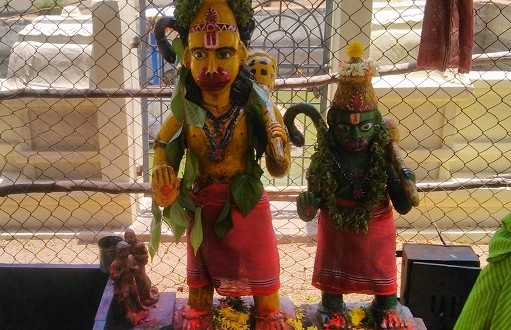
Because there is an idol of Anjaneya behind Lord Venkateshwara in the sanctum sanctorum, the Shri Lakshmi Venkateshwara temple is known as Hanumanth Kshetram. The idol of the presiding deity is said to have been installed by guru Kripacharya.

Allapaka Annamacharya, all the Sankaracharyas of Advaita mutt, the heads of Ahobilam mutt, and Mahakavi Kshetrayya are said to have visited this spot. The Tirumala Tirupathi Devasthanam has just taken on the construction of this temple.

This temple also houses the goddess Shri Padmavati Thayar, who is commonly visited after Lord Venkateswara. The current location of Devuni kadapa is also known as Patha kadapa (old kadapa).

The temple has got lot of signifiance.

Pilgrims from all over the world and India who would like to go to Venkateswara swamy temple in Tirupathi will visit Devuni Kadapa temple, as well.

Devuni Kadapa is an archaeological treasure.

The main deity is Shri Lakshmi Venkateshwara Swamy (Lord Vishnu). Maha Vishnu is in Vishnu form, and is standing.

Devuni kadapa temple timings

S.NoTemple Darshan HoursDayTimings
1Morning HoursMon, Tue, Wed, Thu, Fri6:00 am – 12:30 pm
2Evening HoursMon, Tue, Wed, Thu, Fri3:30 pm – 8:00 pm
3Morning to EveningSat (No Break or Closing Timings)6:00 am – 8:30 pm

During festival times, the timings may differ.

Special Poojas/Sevas

  • Abhishekam is performed on Friday’s at 6:00 am. Ticket Costs Rs.100 for a person
  • Aaku Pooja is performed for Hanuman on Tuesday’s for a family. Ticket costs between Rs.500 -Rs.600, as it depends on the Aaku cost .
  • Saravana Nakshathram Kalyanotsavam is performed for a family. Ticket Costs Rs.100. Timings: 10:30 am – `12:00 pm.
  • Seva or Darshan tickets is not needed for children below 12 years

How to reach Devuni Kadapa?

  • 7 km from Kadapa Railway station.
  • 4.5 km from Kadapa Bus station.
  • 145 km From Tirupati, which takes 2 hours 45 mins by Road.
  • The nearest international airport is at Tirupati which is 139 km away.

You may also like: Sri Ranganathaswamy Temple (Rangasthala ) – Chikkaballapur – Karnatka

https://mytempletrips.in/sri-ranganatha-swamy-temple-rangasthala-chikkaballapur-karnatka/
Kadapa temple – Sri Lakshmi Venkateswara Swamy Temple