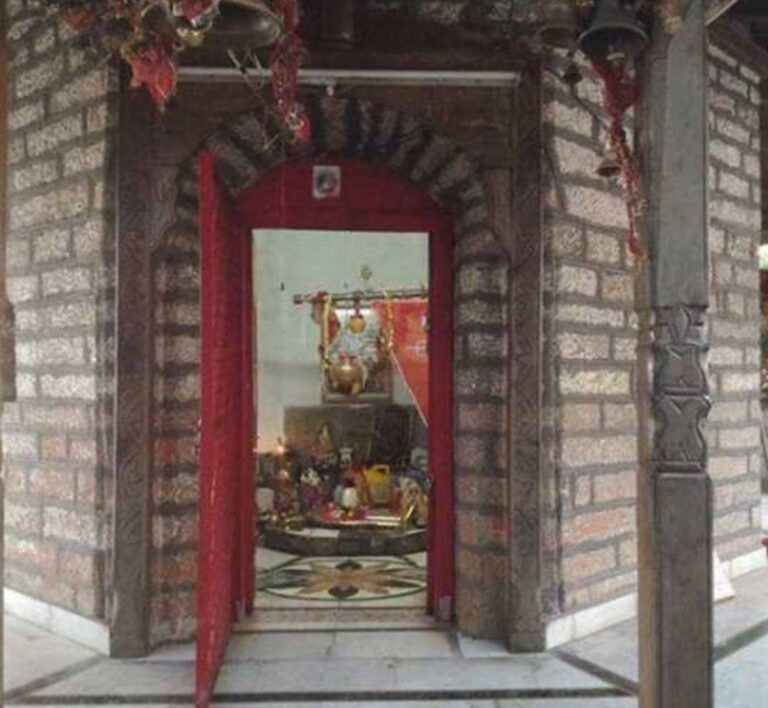
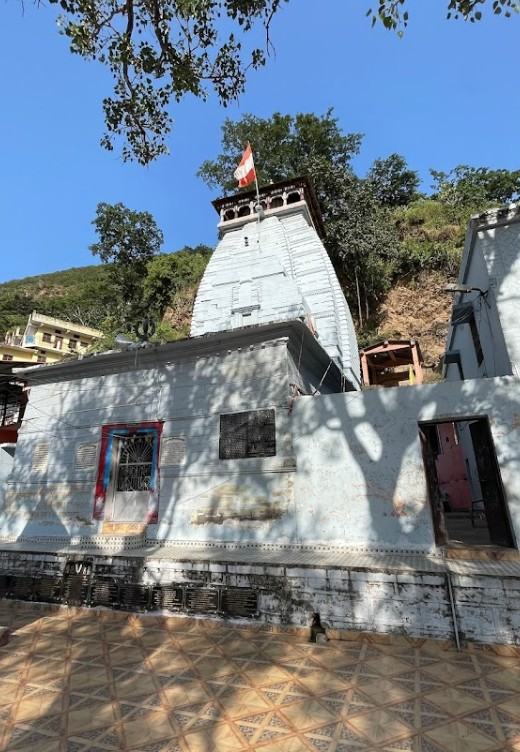
Sri Neelamega Perumal Temple Raghunath ji is one of the famous Lord Vishnu temples. It is Situated in Deva Prayag which is in Tehri Garhwal District of Uttarkhand.

This temple is one of the 108 divya desams temples .

This temple is also called as Thirukandam.

Thirukandam is also called as “Kadinagar” and “Devaprayag”.

About Devaprayag

Devaprayag is situated aroud 1700 feet from the sea level. Devaprayag is the place wherfe rivers Alaknanda and Bagirathi meet.

Thus this place of Confluence is considered very Sacred and bath here in ganga is considered purifying.

About Sri Neelamega Perumal Temple Diety

The presiding deity of this temple is Lord Neelamega Perumal .

Shri Neelamega Perumal Raghunath ji Temple (Divya Desam)

Lord Neelamangala Perumal is also called as Lord Purushothaman. He is in a standing posture facing towards the east.

And the goddess of the temple is Pundareega Valli Thayaar.

Sri Neelamega Perumal Temple Legend

It is said that performing Annadhanam at the temple brings good fortune.

A king by name of Sweth Kethu did a number of good deeds. After his death, his soul was possessed by an insatiable hunger.

Sweth Kethu approached Lord Bharma to solve his problem of hunger.

Lord Brahma told Swetha kethu that his suffering was because he did not perform any Annadhanam.

Sweth Kethu at the advice of Lord Brahma approached Agasthya Muni.

Agasthiya Muni told him to gift his punyams in the form of a gold ring. This gold ring was sold by Agasthiya Muni and Annadhanam was performed at Deva Prayag.

This Sorted the problem of Sweth Kethu.

This is also the place where Pandavas bathed and prayed to the Lord to get rid of their sins of killing their relatives in the war.

It is said that the banyan tree located in the temple here would survive the pralaya at the end of kali yuga.

It said that Lord Vishnu, Lord Shiva and Lord Brahma reside inside this tree. The Perumal would swallow the entire universe and as baby lie down on one of the leaves of this tree as Vadapathra Sayee and save the entire universe from destruction.

The king of this place came and workshiped Lord Purushothaman guidance.

Lord Perumal appeared in the dream of the king and asked him to get Periyazhwar here.

And accordingly, Priyazhawar came and praise this perumal by his song.

This brought rain to this region. The Perumal on whom Periyazhwar sung Mangalasasanam is called Raghunathji.

It is said that Rama, Dasaratha, Brahma did Penance here. Raghunathji is said to have been consecrated by Adi Shankara. A beautiful Hanuman is seen behind the temple.


You may also like: Sri Ranganathaswamy Temple (Rangasthala ) – Chikkaballapur – Karnatka

https://mytempletrips.in/sri-ranganatha-swamy-temple-rangasthala-chikkaballapur-karnatka/

How to reach Shri Neelamega Perumal Raghunath ji Temple?

Google Maps link: https://g.co/kgs/hv7NGBN

By Air

  1. Nearest Airport: Jolly Grant Airport, Dehradun (Approx. 90 km from Devprayag).
  2. From the Airport:
    • Hire a taxi directly to Devprayag.
    • Alternatively, take a bus or shared taxi to Rishikesh and then to Devprayag.

By Train

  1. Nearest Railway Stations:
    • Rishikesh Railway Station (Approx. 74 km away).
    • Haridwar Railway Station (Approx. 94 km away, better connectivity).
  2. From the Station:
    • Hire a cab.
    • Take a bus or shared jeep towards Devprayag.

By Road

  1. From Delhi:
    • Distance: ~294 km (via NH 334).
    • Drive: About 8-9 hours.
  2. From Rishikesh:
    • Distance: ~74 km.
    • Drive: 2-3 hours.
  3. Public Transport:
    • Regular buses and shared taxis are available from Rishikesh, Haridwar, or Dehradun.
Shri Neelamega Perumal Raghunath ji Temple (Divya Desam)- Garhwal – Uttarkhand
Badrinath Temple – बद्रीनाथ मंदिर – Hindi me Jankaari

Badrinath Temple – बद्रीनाथ मंदिर – Hindi me Jankaari

भगवान विष्णु को समर्पित चार धाम में से एक बद्रीनाथ मंदिर Badrinath Temple ( बद्रीनाथ मंदिर) है। अलकनंदा नदी के किनारे गढ़वाल पहाड़ियों में स्थित है। इस मंदिर का उल्लेख…
Badrinath Temple – बद्रीनाथ मंदिर

Badrinath Temple – बद्रीनाथ मंदिर

भगवान विष्णु को समर्पित चार धाम में से एक बद्रीनाथ मंदिर Badrinath Temple ( बद्रीनाथ मंदिर) है। अलकनंदा नदी के किनारे गढ़वाल पहाड़ियों में स्थित है। इस मंदिर का उल्लेख…

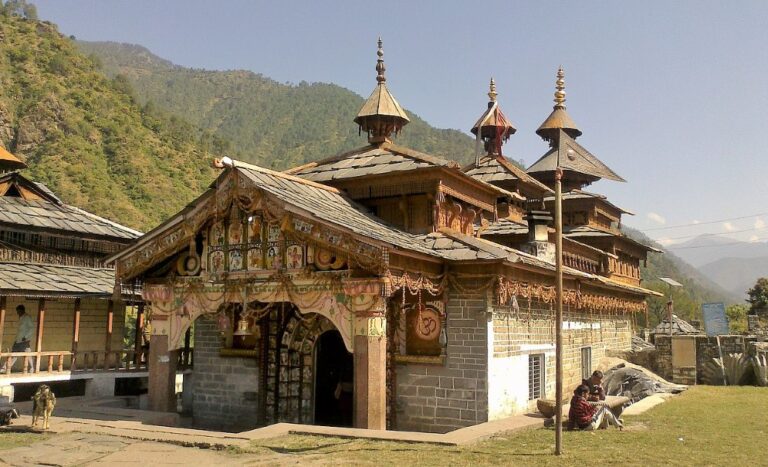
In the state of Uttarakhand, the Mahasu Devta Temple is located in Hanol village.

This place is close to Chakrata, and is on the eastern bank of the Tonnes River (Tamas), 190 kilometres from Dehradun and 156 kilometres from Mussoorie.

It is said that in the deitydom, Mahasu Devta rules supreme over the countless native gods and goddesses in addition to serving as the solitary judge for mankind.

He wields his power on both secular issues and the religious dispensation of people.

People's disagreements are resolved using the special LotaPani adjudication.

A party ritually fills a metallic goblet with water for this purpose in the name of Mahasu Devta, and the disputants are then instructed to sip the water in his or her honour.

The person who made the erroneous statement experiences consequences after drinking the water.

Legend of Mahasu Devta Temple

Mahasu Devta makes an appearance as the four brothers in a quadruple form. According to mythology, the pandavas followed Krishna when he vanished at the end of the DwaparYuga.

They cross the Tonnes River. Yudhishtra was fascinated by the grandeur of the location and urged Vishwakarma to construct a temple there and spend nine days with Draupadi.

Later, the area was given the name Hanol in honour of Huna Bhatt.

Demons roamed Uttrakhand at the beginning of the Kaliyuga, eating people and destroying communities.

The most powerful demon was Kirmir, who had swallowed all seven sons of Huna Bhatt, a Brahmin with a good heart.

Demon threw a bad omen and wished to make Kirtaka the Brahmin's wife; she begged to Lord Shiva to preserve her virginity.

Kirmir was able to flee to her husband since Lord Shiva had rendered her blind.

They then prayed to Ashtbhuji Durga, also known as Hatkeshwari Devi of Hatkoti, who urged the pair to travel to the Kashmir mountains and ask Lord Shiva for assistance there.

When they did, Lord Shiva granted their prayer for the swift annihilation of all evil.

Huna Bhatt was instructed to return to his house, carry out specific rituals, and worship Devi.

Upon doing so, the shakti rose from the earth with flames surrounding her and instructed Huna Bhatt to yoke a pair of bullocks who had never been yoked before and plough a portion of his field every Sunday with a solid silver plough and a shoe made of pure gold.

The Mahasu brothers, their ministers, and the army will arrive on the seventh Sunday to free the populace from the grip of the demon.

Huna Bhatt followed through on this, but on the sixth Sunday after turning on five furrows, a deity appeared out of each one: from the first, Botha; from the second, Pavasi; from the third, Vasik; and from the fourth, Chalda. All of the brothers shared the prefix Mahasu (Char Mahasu) in their names.

Their heavenly mother Devladli Devi and their ministers emerged from the fifth furrow. From the field, countless armies appeared like mushrooms.

When Huna Bhatt followed instructions, the Mahasu brothers slaughtered the entire demon army. In a Mount Khanda ravine, Chalda Devta captured Kirmir.

Today, one can still see the sword traces on the granite.

The demon Keshi took over Hanol while the Mahasu brothers were not present.

Along with the army, Chalda Devta travelled to the Masmor Mountains, where Keshi had left, along with his troops Shitkulia, Kaolu, and others.

After the demon was vanquished, Chalda Devta triumphantly made his way back to the locations he had designated with his heroes.

In order for the brothers to administer their different territories and protect against the misfortunes of everyone who would worship them as gods and practise jagara, he split the nation among them.

But the Mahasu brothers' business effort ended in failure. Mahasu Devta initially gave Huna Bhatt their word that they would show up on the sixth Sunday.

The Mahasu brothers were harmed by Huna Bhatt's plough since they arrived a week early; he was in the field and was not aware of their premature arrival.

Botha suffered a knee injury as a result, rendering him unable to walk. The blade of grass hurt Vasik's eye, impairing his eyesight.

Pavasi had a small portion of his ear removed. Only Devladli Mata and Chalda were unharmed.

After that, Botha preferred to reside in his temple at Hanol, which is located on the right bank of the Tonnes River.

Pavasi continually moves across his dominion, spending years at Hanol, Lakhmandal, Authana, and Uttarkashi.

Being in good health, Chalda was able to exercise throughout the entire dominion in the name of Botha Mahasu for a continuous twelve years.

The four deities each have an attendant, or bir. They are Shitkulia, Kailath, Kapala, and Kaolu. Each and every bir has a female helper, or balyayini.


You may also like: Garjiya Devi Temple – Ramnagar – Nanital – Shakti peeth

https://mytempletrips.in/garjiya-devi-temple-ramnagar-nanital-shakti-peeth/
Mahasu Devta Temple at Hanol village – Uttarakhand

Friends, In the Garjiya village next to Ramnagar on NH 121 in the Nainital district of Uttarakhand, there is a temple called Garjiya Devi.

Where is Garjiya Devi temple located?

It is 75 kilometres from Nainital and 13 km from Rmanagar. It is located on the Corbett National Park's periphery. A shakti shrine is there.

The ruling deity is Garjiya Devi. It is perched atop a sizable rock in the Kosi River. One of the well-known temples in the Nainital area.

Legends of Shri Garjiya Devi temple

According to legend, Garjiya Devi is the manifestation of Goddess Parvati, the Giriraj, daughter of the King of the Himalayas.

According to the legends and beliefs of the residents of Ramnagar, the history of Garjiya devi mandir is mostly associated with the ancient rural region of Dhikuli, which is close to Ramnagar.

Another legend holds that Bhairav Dev, a follower of Lord Shiva, asked Garjiya, his sister, to marry Kosi and live on the river itself in order to calm the river's wrath.

His sister Garjiya married Kosi and began living in the rock in the Kosi river.

Being a manifestation of Goddess Parvati, Garjiya bestowed her heavenly blessings on the entire area, and it is said that once Garjiya Devi lived on the rock, the Kosi River never flooded again.

The temple hosts a sizable fair on the day of Kartik Poornima.

Numerous thousands of followers attend. On the fifteenth lunar day of the Kartik month, which falls between November and December, this holy day is celebrated.

Guru Nanak Jayanti also falls on the same day as Kartik Purnima.


The Garjiya Devi temple, one of the area's most revered Shakti peetha, has a long history of association with old royal houses like the Katyuri and Kuru.

The history of the Garjiya Devi temple is rich with legends.

The Temple visit is open for tourists all round the year except for the monsoon season. During mansoon the water level in Kosi river rises and hence authorities restirct the visit to the temple during that time.

Because she is the daughter of the Mountains, Himavan, Goddess Parvati is also known as Girija. The serene and tranquil Maa Paarvati avatar of Shakti resides in the Garjiya devi temple in Uttarakhand.

Visiting this place to get blessings from Lord Shiva and Mata Parvati.

You may also like: Katarmal Sun Temple, Almora, Uttarakhand.

https://mytempletrips.in/katarmal-sun-temple-almora/
Garjiya Devi Temple – Ramnagar – Nanital – Shakti peeth

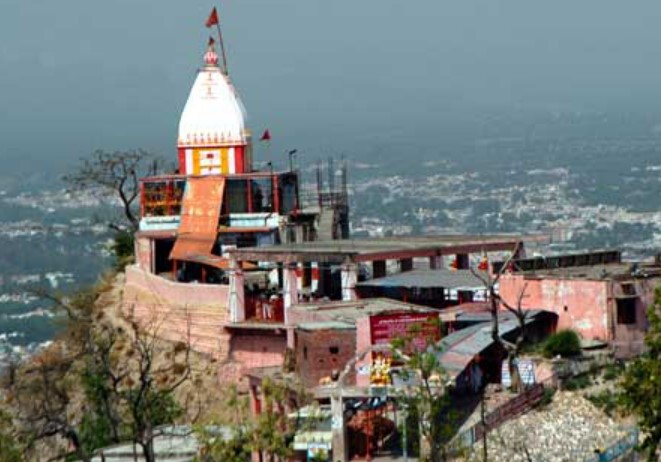
The Chandi Devi Temple in Haridwar is a dedicated to Goddess Chandi Devi. The temple is located in the holy city of Haridwar in the state of Uttarakhand.

The temple is located atop the Neel Parvat on the eastern summit of the Sivalik Hills, the Himalayas' southernmost mountain series.

During his time as King of Kashmir, Suchat Singh established the Chandi Devi Temple in 1929.

The main murti of Chandi Devi in the temple, on the other hand, is supposed to have been installed in the 8th century by Adi Shankaracharya, one of Hindu religion's greatest priests.

Chandi Devi Temple Haridwar - Neel Parvat Teerth

The temple, also known as Neel Parvat Teerth, is one of Haridwar's Panch Tirth (Five Pilgrimages).

Devotees regard the Devi Temple as a Siddh Peetha, or a site of worship where desires are fulfilled.

It is one of three such Peethas in Haridwar, along with Mansa Devi Temple and Maya Devi Temple.

Chandi Devi Temple presiding deity

Goddess Chandi also known as Chandika is the presiding deity of the temple.

Chandi Devi Temple Haridwar - Ma chandi devi

Chandi Devi Temple Haridwar Story

As per legends long long ago, the demon rulers Shumbha and Nishumbha conquered the kingdom of Indra, the god-king of heaven, and exiled the gods from Swarga (heaven).

After intensive petitions from the gods, Parvati took the shape of Chandi.

Shumbha despatched his demon leaders Chanda and Munda to kill her.

They were murdered by the goddess Chamunda, who arose from Chandika's rage.

Shumbha and Nishumbha then attempted to assassinate Chandika but were defeated by the goddess.

Following that, Chandika is claimed to have rested for a brief time at the peak of Neel Parvat, where a shrine was eventually built to commemorate the legend.

In addition, the mountain range's two peaks are known as Shumbha and Nishumbha.

How to reach chandi devi temple?

Google Maps link: https://goo.gl/maps/BoKAcFV34JhtXT638

Address: W5MJ+G63, Haridwar, Uttarakhand 249408
Open timings: 5.00 AM to 7.00 PM everyday

Chandi Devi Temple Ropeway

A ropeway ride is a practical way to reach the summit of the Temple.

Chandi Devi Temple Ropeway

It crosses the mountains for around 4-5 kilometres and brings you through a gorgeous journey where you may experience the splendour of this region firsthand.

A journey through the Chandi Devi Udankhatola costs roughly INR 84 per person.


Chandi Devi Temple Haridwar

Devbhoomi Uttarakhand is home to several tales, some well-known and others less so, such as the one about Lord Kartik. The Kartik Swami temple, located on a hilltop near the village of Kanakchauri in Rudraprayag, is one of the most renowned temples in the state devoted to Lord Shiva's son Lord Kartik.

The temple, located atop Kronch Parvat, honours Lord Kartik, also known as Lord Muruga or Lord Murugan in regions of India, and his love to his parents.

Kartik Swami Temple Rudraprayag  Uttarakhand

How to reach the temple?

Kartik Swami temple devoted to Lord Kartikeya, the eldest son of Lord Shiva, and is located at a high altitude in the Gaharwal Region of Uttarakhand's Rudraprayag District.

The temple is a 3-kilometer journey from Kanak Chauri village, which is 38 km from Rudraprayag on the Rudraprayag-Pokhri highway.

How far is Kartik Swami from kanakchauri?

You can take the 3 km trek from Kanakchauri in Rudraprayag district to reach the temple.

What is the history of Kartik Swami temple Uttarakhand?

Kartik Swami is known as "God for War and Victory" in Tamil Nadu, Subramanya in Andhra Pradesh and Karnataka, and Kartikeya in Bengal.

Kartik temple is placed at a high altitude of 3,050 metres above sea level at the end of a narrow mountain with a deep valley. It provides us with a breathtaking perspective of the Himalayan range and nature's radiance.

The temple contains a marble-carved image of Lord Kartik Swami.

Kartik temple is placed at a high altitude of 3,050 metres above sea level at the end of a narrow mountain with a deep valley.

Kartik Swami Temple Rudraprayag  Uttarakhand

It provides us with a breathtaking perspective of the Himalayan range and nature's radiance. The temple contains a marble-carved image of Lord Kartik Swami.

According to mythology, Lord Shiva reportedly instructed their sons, Lord Kartik and Lord Ganesha, that whoever comes first after taking a complete circuit of the cosmos would enjoy the luxury of worshipping first.

Kartik began his trek, but Lord Ganesha demonstrates his intelligence by circling Lord Shiva and declaring that the entire universe is in him.

Lord Shiva, impressed by Ganesha's wisdom, granted him the honour of being worshipped first. Lord Kartik became enraged and surrendered his flesh to his mother Parvati and his bones to his father Lord Shiva.

The idol in this shrine depicts Lord Kartikeya's bones.

Which peaks are visible from Kartik Swami temple?

The Kartik Swami hike provides spectacular views of the snowy peaks beginning with Banderpunch in the west, Kedarnath Dome, and Chaukhambha Peak.

Dronagiri, Nanda Ghunti, Trishul, the Nanda Devi range of peaks, and Meru and Sumeru Parvat.


You may also like: GirjaBandh Hanuman Temple – एक अनोखा मंदिर जहाँ भगवान हनुमान स्त्री रूप में विराजमान है – A Unique Lord Hanuman Temple

https://mytempletrips.in/girjabandh-hanuman-temple/


Kartik Swami Temple Rudraprayag Uttarakhand

The Gollu or Goljyu Devta, a manifestation of Lord Shiva in the shape of Gaur Bhairav, is the main diety of the Chitai Golu Devta Temple in Chitai Almora. Although there are many more temples in Almora, this one is the most well-known and revered. It is located on the Jageshwar Dham route in Uttarakhand, 8 kilometres from Almora.

It is said that if a worshipper asks for a wish with a clear conscience, his or her wish is granted! Gollu devata is he god of justice !

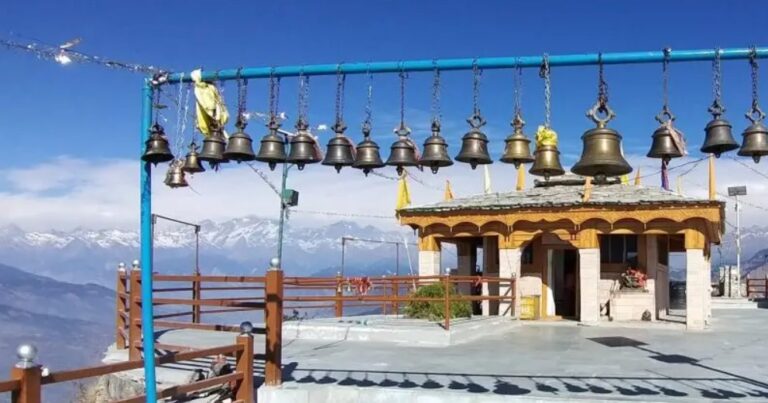
The temple can be recognised by the numerous bells hanging throughout the complex.

Chitai Golu Devta Temple

Devotees hang these bells as gifts while making wishes or as expressions of gratitude when those wishes come true.

On the tourism map, Chitai Golu Devta Temple is a significant religious attraction in Almora. For the residents of Almora and the nearby villages, it is the most revered temple.

Those who did not receive justice in court have covered the temple walls with court stamp papers. Thousands of bells that have been given by folks whose wishes have been granted are hung all around the temple.

History of Chitai Golu Devta Temple

According to history, Golu devta is regarded as the valiant son and general of Katyuri monarch Jhal Rai, his mother Kalindra, and grandfather Hal Rai. Champawat is recognised historically as the location of Golu Devta's origin.

Two additional local deities, Harishchand Devjyun and Sem Devjun, are thought to be his mother's siblings.

Legend of Chitai Golu Devta Temple

Another legend claims that once a king went hunting in the wilderness and became thirsty. He then instructed his servants to bring him some water. The maids intentionally woke up a woman who was in the middle of meditation. The lady won the king's affection, and they got mrried.

The other queens became jealous of her and threw the newborn baby into a well and a fisherman found it. They replaced the baby with a stone.

Years later when the prince realized who he really was, So he took a wooden horse and in front of the king tried to make the horse drink water from the lake.

When the king notices this, he tells him that the horse wouldn’t drink water. To this the kid tells the king that if a woman can give birth to a stone, then why can’t a wooden horse drink water.

Realizing the truth, the king punished the other queens and his son went to be crowned and was known as the Gwalla Devata.

There are other tales that say Golu Devta was killed by the king of Binsar due to some false doubt and he was beheaded by the king. His head fell at Kaparkhan and his body fell at Gairad at Dana Golu where the temple now stands.

How to reach Chitai Golu Devta Temple?

  • By Air: The nearest airport to Almora is at Pantnagar, which is about 127 KMs From Almora.
  • By Train: The nearest railway station is at Kathgodam which is at 90 Kms from Almora and Kathgodam is quite well connected to various parts of the country.
  • By Road:
    • Chitai Golu Temple is well connected through road network.
    • Since air and rail connectivity in Uttarakhand is limited, road network is the best and easily available transport option.
    • You can either drive to Chitai Golu Temple or hire a cab/taxi to reach Chitai Golu Temple from Delhi or any other nearby cities.

You may also like: Katarmal Sun Temple, Almora, Uttarakhand.

https://mytempletrips.in/katarmal-sun-temple-almora/
Chitai Golu Devta Temple – The God Of Justice – Almora – Uttarakhand

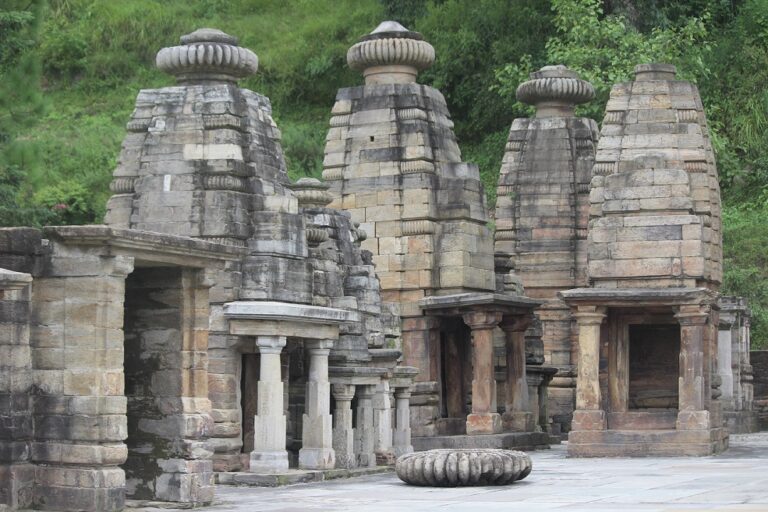
The Katarmal Sun Temple is a historically significant 12th century monument and an example of meticulous sculpturing. The sun's first rays land directly on this Sun Temple.

It is believed that the Katarmal Sun temple was built in 9th century by Katarmalla, a Katyuri Raja. ( In the early medieval period, Kumaon was ruled by the Katyuri dynasty. )

About Sun Temple Katarmal

The main deity of the katarmal sun temple almora is called Burhadita or Vraddhaditya. This is another name of Sun god.

This temple also houses the idols of Shiva-Parvati and Lakshmi-Narayana.

The Surya idol at the Katarmal Sun Temple goes back to the 12th century and is known for its exquisite architecture, finely constructed stone and metallic sculptures, and elegantly carved pillars and wooden doors.

The Katarmal Sun temple is now a protected monument and is preserved and maintained by the Archeological Survey of India.

image source

If you do not know, the intricately carved doors and panels have been removed and shifted to the National Museum in Delhi. This was done after the 10th-century idol of the presiding deity was stolen.

Legend of sun temple katarmal almora uttarakhand

As per legend, when Pandavas were in exile they lived here briefly.

One of the conditions of their exile was “They must maintain their anonymity for fourteen years of their exile“. And if they breach this condition, they will not get their kingdom back.

It is believed that in the Mahabharata, Pandavas once started building a magnificent Sun Temple in a single day as their hideout.

But due to some reason they had to leave the temple construction in between and leave the place.

Hence the temple was not completly built.

Katarmal temple of Almora, whose part of the roof is half done is said to be that temple. And today as well, the partially complete roof of the temple is clearly visible.


How to reach Katarmal

The temple is situated at around 7Km from Almora , in the state of Uttrakhand.

If you are travelling from Nanital, the temple will be around 70 KMS.

The temple is at in altitude of around 2115 meters above sea level.

Katarmal Sun Temple is the Second important Sun Temple in the country, the first Sun temple being the Konark Sun Temple in Odisha.

For other places of interest in Almora - click here

You can visit Nanital tourism websiet for more places in Nanital.


You may also like: Kedarnath temple – Legend, history, timings, best time to visit

https://mytempletrips.in/kedarnath-temple-legend-history-timings-best-time-to-visit/
Katarmal Sun Temple, Almora, Uttarakhand.

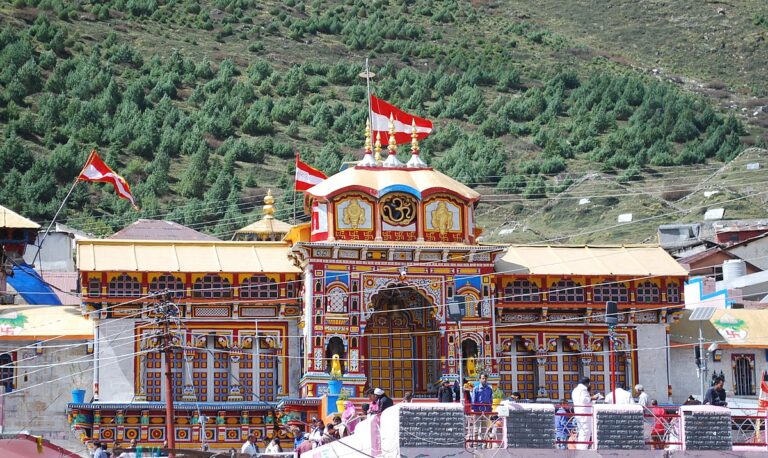
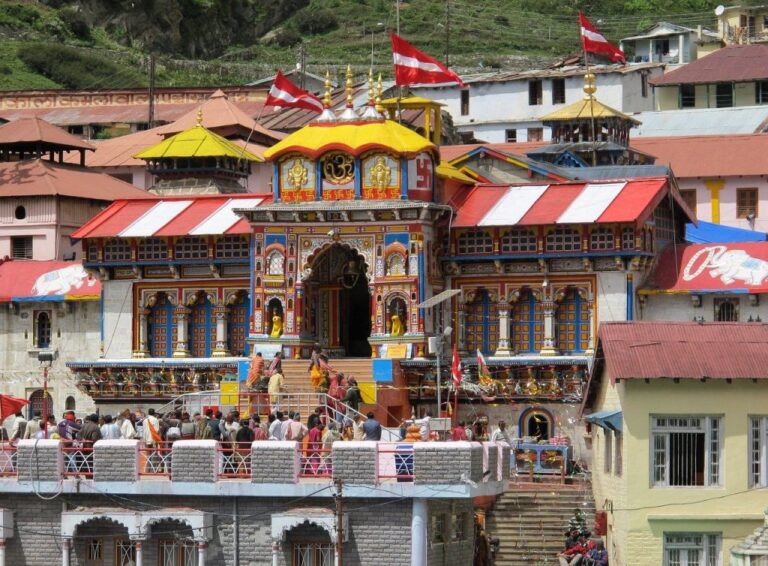
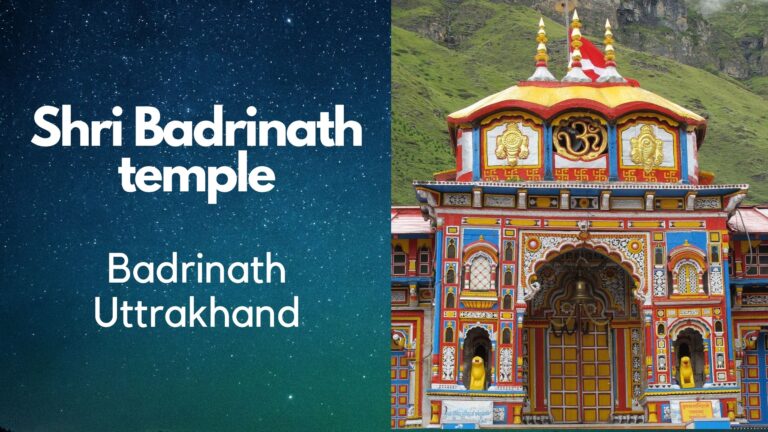
One of the Char Dham, the Badrinath temple also called as the Badrinath dham, dedicated to Lord Vishnu is one of the most important pilgrimage sites for Hindus. It is situated high in the Garhwal Hills along the River Alaknanda.

Badrinath temple

image source

Badrinath temple is also mentioned in the 108 Divya Desams which mentions pilgrims dedicated to Lord Vishnu.

In the lap of snow-clad Himalayas at the height of 10,279 feet it is open only for six months.

Due to the adverse climate conditions, the temple is accessible only in summers. It is close to the Nar and Narayan Hills.

The Neelkanth mountain is in the backdrop of this magnificent piece of architecture.

About Badrinath Dham- Badrinath temple history

The temple Badrinath is believed to have been set up by the saint Adi Shankracharya himself. In this temple, there is an idol of Lord Vishnu made of black stone.

The height of this idol is around 1 meter. This idol is included in the 8 Swyama Vyakta Kshetras or better understood as the self-manifested statues of Lord Vishnu.

The pilgrim is mentioned in the 108 Divya Desams of Lord Vishnu. These hold a very special place for the devotees of Lord Vishnu.

Though the temple is open only for six months for worship but there is an Akhand Jyoti which is lit throughout the year. It has sufficient oil to last six months at a stretch even if no one adds more oil to it.

Best time to visit the Badrinath Temple

The temple is open for the devotees only for six months at a stretch. Due to extreme situations and cold weather which is not easy for humans to bear.

It is open from the month of April to October.

Badrinath temple timings

The timings for the temple for offering prayers are 4.30 AM to 1 PM and then 4.30 PM to 9 PM.

Every devotee needs to spend at least 2-3 hours or more. The temple is opened on the eve of Akshaya Tritiya each day in April.

The last day of offering prayers is the day of Bhatridwityia. After this day the temple is closed for six months.

The idol is taken to the Narsimha temple and only the Akhand Jyoti remains burning in the temple.

How to reach Badrinath Temple

There are no direct trains to Badrinath temple.

You will need to reach Haridwar or Rishikesh.

  • You can go from there by the means of Buses or Taxi. The temple is at a distance of 300km from Rishikesh and it takes 12 hours to reach there by road.
  • You can also go by air to the nearest airport of Jolly Grant Airport in the city of Dehradun. form here the distance is 314 km which can be covered by road. There are daily flights from Delhi and it is well connected to the whole world from here.
  • The nearest railway station is Rishikesh. It will is well connected from various places in India by rail. From there you will need to take the journey by road.
  • As per a new effort made by the Uttarakhand government, helicopter service from Dehradun has been started for those who can not reach the difficult terrain otherwise.

Legend behind Badrinath temple

According to the famous Hindu Legend Lord Vishnu once sat down for meditation at this place.

As the weather got severe and there was very cold weather, Goddess Lakshmi consort of Lord Vishnu saved him in the form of Badri Tree.

Lord Vishnu was very pleased with the devotion of Goddess Lakshmi and named the place Badrika Ashram from where it fondly became Badrinath over time.

Places around Badrinath temple

There are few more places which are a must visit around Sri Badrinath Temple

Tapt Kund ( Agni Teertha )

This is a hot sulphur spring that is believed to have medicinal values. It is in the temple. It is also believed that the river Alaknanda originates here.

Well known and very colourful festivals such as Mata Murti ka Mela and Badri Kedar festivals are celebrated with a lot of joy.

The water is at 45 degrees Celsius. It is believed to be the home of Lord Agni or the fire god. It is close to the riverbank of river Alaknanda so devotees enjoy a dip in the Kund as well as the river.

A dip in the Kund water is believed to relieve you of several skin diseases. Devotees take a dip in this kund and purify themselves before they enter the temple as a ritual.

It is believed to clean your souls of all the sins and make you pure. This also is known as Agni Teertha in Hindu mythology.

A belief says it was originated from the Kapal or head of Lord Shiva. the thermal energy that is present there is much greater than in other water bodies.

Charanpaduka ( on Narayan Parvat )

There are footprints that are believed to belong to Lord Vishnu himself. It is found at the top of a rock at the height of 3380ft and at a distance of 3 km from the main temple.

An arduous trek is required to reach the spot. The rock is equally important and visited by devotees each year.

This is believed to be the first step of Lord Vishnu on earth. This rock is situated on the Narayan Parvat. It takes around 1-2 hours to complete the trek.

Vasundhara Falls

These falls originate from between the Nar Narayan peak. It is in the village of Mana that is 9 km from the main temple.

Here the falls meet the river Alaknanda at a height of 12,000 ft. this is also believed to be the resting place of the Pandavas.

The visit to these falls is believed to clear your mind of impure thoughts. It can also be reached by trekking 6 km from Mana river.

It takes around 2 hours. The trek has a difficult stretch after crossing the Saraswati temple.

Bhim Pul

This is a bridge made of stones naturally on the river Saraswati. It is believed to have been found by one of the Pandava brothers named Bheem.

While some call it so as they think that Bhim threw the stones in such an arrangement to turn it into a bridge to cross the hills. It is a mesmerizing view.

Badrinath temple FAQ

Where is Badrinath temple located in India?

Badrinath temple is located in Badrinath which is a holy city in the state of Uttrakhand, India. It is situated at the height of around 3000 meters or 10K feet. It is one of the Char Dham places in India. Badrinath Temple is one of the most important pilgrimage destinations for Hindus all over the world.

Badrinath is situated on the bank of which river?

Badrinath is situated on the bank of river Alaknanda.
Alaknanda is a river in Himalayas and is one of the two headstreams of river Ganga.

Badrinath temple is in which state?

Badrinath temple is situated in the Indian state of Uttrakhand

Who built Badrinath temple?

Is it said that the Badrinath temple was built by Sri Adi Shankracharya.

Badrinath temple is of which god?

Badrinath temple is dedicated to Lord Vishnu.

How to reach Badrinath temple from Delhi?

If you want to drive down to Badrinath from Delhi, the time taken will be close to 17 to 18 hours. It is at a distance of approximately 550 kms from Delhi. You can travel by air till Dehradun and take a cab from there. Dehradun is well connected to major cities of India. You can also take train to Dehradun or Rishikesh and then take a cab from there.

How to go Badrinath from Mumbai or Bangalore?

Travel by air to Jolly Grant airport , Dehradun and take a cab from there. Or take a train to Dehradun or Rishikesh and take a cab from there. This is the best way to reach Rishikesh. You can also come to Delhi and then drive down from there or take a cab from there. But from Delhi it will take around 18 hours to reach Badrinath while from Dehradun 12 hours ( around 330 Kms) or from Rishikesh it will be 10 hrs ( 290 Kms)

How to reach Badrinath from Joshimath?

Badrinath is around 45 Kms from Joshimath and will take around 2 hrs to reach. Regular taxis are available. State road transport buses are also available, but check the timings.

How to go Badrinath from Haridwar?

From Haridwar it is 320 Kms , so it will take around 11 hours. You can take taxi which are available easily. You can go to Rishikesh by train and then take taxi from there.


You may also like : Sri Somnath Temple

https://mytempletrips.in/somnath-temple/
Badrinath temple – Legend, How to reach, Temple timings