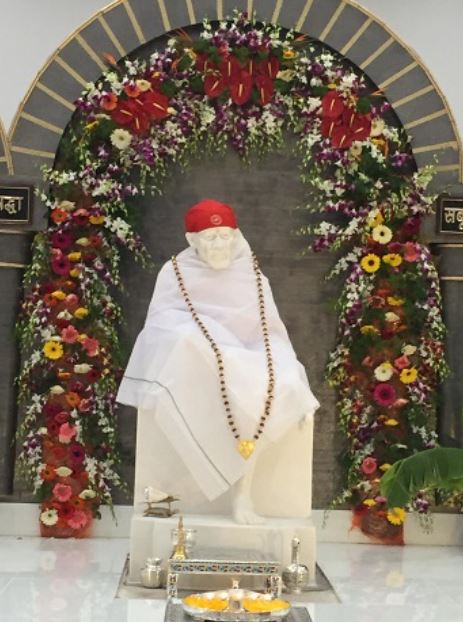
Pratyangira Devi Temple Pondicherry is located outside city of Pondicherry near Auroville.
The place is known as Moratandi .
It is located towards Chennai road from Pondicherry. The road leading to the temple is not fully developed but you can manage the travel in a vehicle.
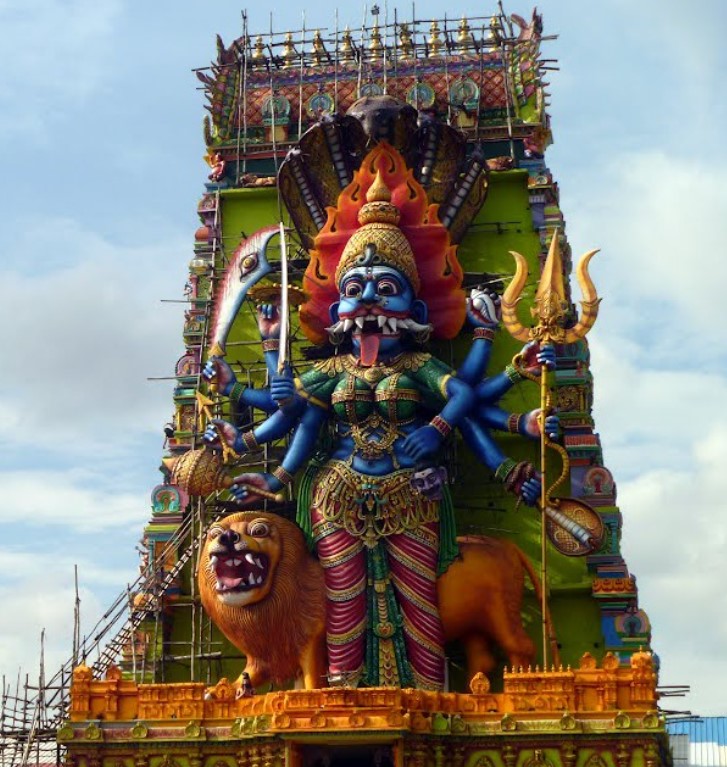
This temple consists of 72 ft idol of Goddess Pratyangira Devi. The temple is located slightly underground.
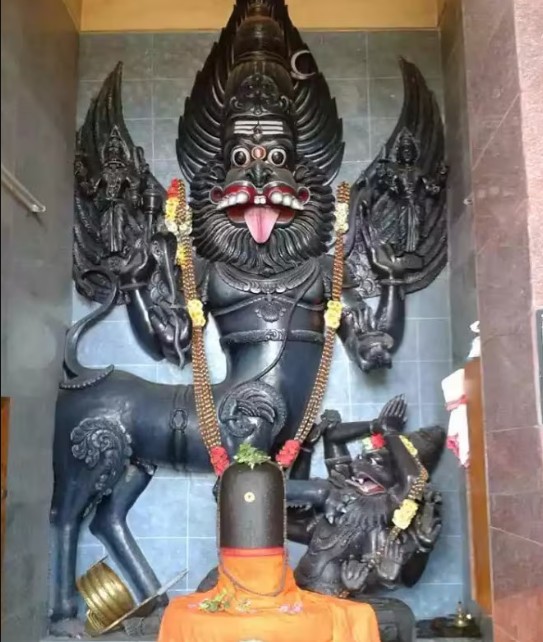
Left side of the temple contain Sharabeshwar temple which has big idol of God Sharabeshwar.
Do visit the temple if you are travelling to Pondicherry!
Pratyangira Devi Temple at Pondicherry
Sri Pratyangira Temple, located in Hosur, Tamil Nadu, India, is one of the prominent temples dedicated to the goddess Pratyangira Devi ( also known as Maa Pratyangira Kalika Alayam ).
Sri Pratyangira Devi Temple temple is also known by several other names such as Narasimha Kshetram, Shoolini Temple, and Chakra Narasimha Temple.
The temple is considered to be one of the powerful shrines for the worship of the goddess and is visited by a large number of devotees from various parts of the country.
The origin of the temple dates back to the ancient period, and according to the legends, the temple was built by the great sage Durvasa. It is believed that the sage had invoked the goddess Pratyangira Devi to control his anger and to achieve peace of mind.
The temple is also associated with several other legends, and it is said that the goddess has the power to grant boons and remove obstacles in the lives of her devotees.
The temple complex is spread over a large area, and it comprises several structures, including the main temple, the gopuram, and the dhwaja stambha. The main temple is a magnificent structure with beautiful carvings and sculptures.
The gopuram, which is the main entrance to the temple, is adorned with intricate designs and paintings. The dhwaja stambha, which is the flagpole, is an important landmark of the temple and is considered to be the symbol of victory.
The deity of the temple is represented by a stone idol of the goddess Pratyangira Devi, and the idol is adorned with a variety of precious stones and jewelry.
The idol is placed in the sanctum sanctorum of the temple, and devotees offer puja and perform various rituals to appease the goddess. The temple is also known for its unique architectural style, and it is said that the temple was built in accordance with the ancient Hindu texts on temple architecture.
In addition to the religious importance, the temple also has historical significance, and it is considered to be one of the oldest temples in the region. The temple is also a popular tourist destination, and it attracts a large number of visitors who come to witness the beauty and grandeur of the temple.
Sri Pratyamgira temple hosur address
Address: PVGC+R22, Hosur - Krishnagiri Rd, Sipcot Phase II Industrial Complex, Baskardas Nagar, Moranapalli, Tamil Nadu 635109
Google maps link: https://goo.gl/maps/7oB8qqWW8MZEcsVc8
Hosur pratyangira devi temple timings
Monday
6:30 am–1:30 pm, 3–8 pm
Tuesday
6:30 am–1:30 pm, 3–8 pm
Wednesday
6:30 am–1:30 pm, 3–8 pm
Thursday
6:30 am–1:30 pm, 3–8 pm
Friday
6:30 am–1:30 pm, 3–8 pm
Saturday
6:30 am–1:30 pm, 3–8 pm
Sunday
6:30 am–1:30 pm, 3–8 pm
Sri Pratyangira Temple in Hosur is a magnificent temple dedicated to the goddess Pratyangira Devi. The temple is considered to be one of the powerful shrines for the worship of the goddess, and it attracts a large number of devotees and visitors from various parts of the country. The temple is a symbol of faith, devotion, and spirituality, and it is a place where one can seek peace and solace.
Sri Pratyangira Temple Hosur ( Maa Pratyangira Kalika Alayam )
Sri Chikkanahalli Nagappa Temple ( also known as Swayambu Nagappa Temple ) is located near Bangalore, Karnataka. The temple is actually in Ramanagara. This is a well-known Naga or Snake shrine in the area.
The snake temple is well-known for its naturally formed Naga murti (idol). The Naga murti in the temple is sleeping on a massive stone slab. So this is a very popular and must visit temple in the region.
The Naga murti, which is worshipped in the temple, is also said to be expanding in size.
So stone is growing and has super natural power in curing all types of human problems. Becuase of this miracle, lot of people visit this temple.
Sarpa Dosha Nivarana is associated with the shrine.
After praying in the shrine, devotees obtain relief from various Naga Doshas. Many people suffering from Sarpa Dosha in kundali come here for worship.
They perform special pooja here. Many people swear that after praying at the shrine, they have obtained tranquilly, wealth, success, and good health.
How to reach Swayambu Nagappa Temple, Chikkenahalli, Ramanagara
So the temple is located in Ramanagara which is very near to Bangalore and can be covered in a days trip.
Address of Sri Swayambu Nagappa Temple : Sri Nagappa Temple, Chikkana Halli, KAILANCH HOBLI, Ramanagar Taluk, Karnataka.
So Sri Swayambu Nagappa Temple is one of the famous Nagappa temple around Bangalore and famous for Sarp Dosha Nivarna other being Shri Ghati Subramanya temple and Sri Mukti Naga temple , both of which are around Bangalore.
So do visit these temples when you find time. I did not find much history regarding the origin of the temple, so if you have any comment, feednback or information do post it in the description box below which will be helpful to other readers.
For worshipers of snake gods, Mannarasala Temple, also known as MannarasalaSree Nagaraja Temple is a very ancient pilgrimage center. This temple is around three kilometres south-east of the Harippad bus station in Alleppey district (Kerala).
Shri Mannarasala Temple is the sacred site sanctified by Parashurama's appointment of a famous Brahmin to do the pooja in Mannarshala Temple.
As you approach the temple, you'll notice rows of stone serpent figures on either side, guiding worshipers to their supreme god.
The Mannarasala Temple is the largest temple in Kerala, India, with over 100,000 pictures of snakes along the walkways and among the trees.
Childless ouples come here to worship and seek blessings of the snake god, and after their kid is born, they come here to hold gratitude rituals, frequently bringing fresh snake representations as offerings.
A particular turmeric paste sold at the shrine is said to have healing properties.
Mannarasala temple timing
As you walk along the sandy courtyard under the shade of ancient trees entangled by many kinds of creepers and thick growth of cane where the serpents in large numbers enjoy to sit without disturbance, the devotees in a dream of unspeakable beauty, in a state of ecstasy, would already have achieved half of their objective
First the Sarpayakshi, and next to that the Nagaraja stand facing east, creating a halo for the main deities, drawing power every movement from the continuous offering of worship and ready to bless us with smiling faces. In-front of the shrine of Sarpayakshi, we can see an Ilanji tree surrounded by Serpent images. This very ancient tree is full of holes for serpents to lie down undisturbed. The quiet shrines of Nagachamundi and Nagayakshi are to the south-west of the temple. Sarpayakshi and Nagayakshi are the beloved consorts of Nagaraja. Nagachamundi is his sister. Ngaraja is Ananta (Vishnu) and Sarparja is Vasuki (Shiva).
Various offerings to be made at Shri Mannarasala Temple:
For wealth and prosperity - A pot filled with gold or a gold pot filled with other things.
For education, prosperity and fame - Silk, grains, divine ornaments.
For recovering health - Salt.
For protection from poison - Turmeric
For curing diseases - Pepper, mustard, green peas etc.
For protection from damage - Serpent cave made of gold etc., images of serpents eggs, tree etc.
For long life - Melted butter (ghee)
For getting whatever one wants - Milk, ripe kadali fruit, nilavara-payasam.
For having a child - A big vessel (uruli) made of brass, bronze etc. for performing Nurum Palum.
Type of Pooja:
Abhishekam with coconut water, milk and rose water.
Alankaram with sandal wood garlands, arecanut flower bunches.
Nivedyam with ghee, appam, payasam, balls of molasses, kadali fruit etc.
Sarpabali with Nurum Palum made out of turmeric powder and rice powder.
Mannarasala Amma
The Mannarasala temple's beliefs and rituals are distinct from those of most other temples, and it is one of the few temples where the pooja routine is led by a Brahmin lady.
According to legend, when Nagaraja reincarnated and was born to the then Mother of the Illom before departing for Nilavara, he gave his mother certain privileges and instructions. "Mother herself must offer me worship," he said. On rare occasions, men may be allowed to worship.
After Mother's death, the family's senior-most Brahmin lady will be given the title of Mother. Mother should live as a Brahmacharini and follow penance from the time she assumes this elevated status.
Mannarasala Amma became the mother of the land as she was the 'Mother' of the Lord himself.
Valiya Amma is her popular name. Pilgrims cannot leave Mannarasala without viewing that wonderful celestial radiance with their own eyes, since it is the heart and soul of the city.
Faithful devotees who come to seek Nagaraja's blessings eagerly wait for a glimpse of Valiya Amma and ask for her blessings and advice on how to live a wealthy life.
Valiya Amma, who has become a symbol of Naga deities via fasting and other austerities, as well as conducting rituals and poojas, casts a magnificent light over the temple and the surrounding area, endowing it with heavenly splendour.
Temple Timings
Mannarasala temple opening time is 7.00 AM in morning.
Temple darshan timings:
Monday to Saturday : 07:00 am – 11:00 pm | 05:30 pm – 07:00 pm Sunday : 07:00 am – 12:00 pm | 05:30 pm – 07:00 pm
Pooja at Shri Mannarasala Temple
Those suffering from incurable ailments, those seized by terror as a result of Serpents' wrath and thus finding life unbearable, all come here to pray and return with their wishes granted.
Sarpabali
The most important pooja for pleasing Serpent Gods. Noorum Palum is offered to all Serpent Gods in addition to Sree Nagaraja and Sree Sarpayakshiamma. The pooja also includes Guruthi for Sree Nagachamundiamma and Sree Nagayakshiamma.
Noorum Palum
An important pooja conducted to relieve from various kinds of Sarpa Doshas, Rahu Dosha and Kala Sarpa Yoga.
Muzhukkappu
Adorning the deity with sandal paste.
Arakkappu
Adorning the deity partly with sandal paste.
Mukhakkappu
Adorning the deity's with sandal paste.
Enna Abhishekam
Abhishekam with oil.
Ney Abhishekam
Abhishekam with ghee.
Karikku Abhishekam
Abhishekam with tender coconut water.
Palabhishekam
Abhishekam with milk.
Sarpasukta Archana
Pushpanjali with Sarpa Suktha mantra.
Ashtothara Shatham Archana
Pushpanjali with 108 holy names of the Lord.
Archana
Pushpanjali
Palum Pazhavum Nivedyam
Nivedyam with milk and Kadali fruit.
Malar Nivedyam
Nivedyam for pleasing the Lord.
Thrimadhuram
Nivedyam for pleasing the Lord.
Kadalippazham Nivedyam
Nivedyam with Kadali fruit. For pleasing the Lord. Considered good for 'santhana labdhi' (having children).
Kadalipazham Nivedyam (Uruli kamazthu)
Related to Uruli Kamazhthu offering
Nilavara Payasam
An offering made to Lord Nagaraja (muthassan) residing at Nilavara.
Payasam
Payasam for pleasing the Lord.
Appam
Appam for pleasing the Lord.
Enna Vilakku
Lighting Deepam with oil for pleasing the Lord and fulfilling one's wishes.
Ney Vilakku
Lighting Deepam with ghee for pleasing the Lord and fulfilling one's wishes.
Uruli Kamizhthu
Offering done by childless couples to be blessed with children (for 'Santhana labdhi').
Uruli Nivarppu
The conclusion of Uruli Kamazhthu offering. An offering made by the parents for the wellbeing and long healthy life of their child.
Uruli Nadakkuveppu
Uruli (vessel) is offered along with a prayer for bringing prosperity and fulfilling one's wish.
Annaprasam
The first time a new born is fed with rice (after it has been offered to Lord Sree Nagaraja and Sree Sarpayakshiamma)
Thulabharam
An offering is made to Lord Sree Nagaraja for fulfilling one's wish, well-being, prosperity and long healthy life. It can be any commodity (usually banana, jaggery, milk etc.) which weighs more than one's bodyweight as measured in the balance kept in fron
Sarpa Prathima Nadakkuveppu
Offering for redemption from Sarpa Doshas.
Chuttuvilakku
Lighting of lamps all around the temple.
Ganapathi Homam
Special offering to Lord Ganapathi to overcome obstacles.
Vivaham
Marriage
Chatussatha Nivedyam
The foremost among all Nivedyam. It is also known as Maha Nivedyam. It is an offering for fulfilling one's wishes and bringing prosperity.
Oru Divasathe Pooja
All the poojas of the day for removal of Sarpa Dosha, bringing prosperity and fulfilling one's wishes.
Ashta Naga Pooja
An important pooja for Ashta Nagas (eight main Serpent Gods) starting with Anantha and Vasuki.
Palpayassa Homam
An important pooja conducted for seeking forgiveness for causing harm to Serpents.
Manjal Nirapara
An offering of filling a traditional vessel (para) with turmeric for fulfilling one's wishes.
Mannarasala nagaraja temple address and google location:
Please find the address of the Mannarasala nagaraja temple: Mannarasala sree nagaraja temple, Haripad P.O, Kerala 690514
Mannarasala Temple – Kerala – The supreme place of worship of the serpent god
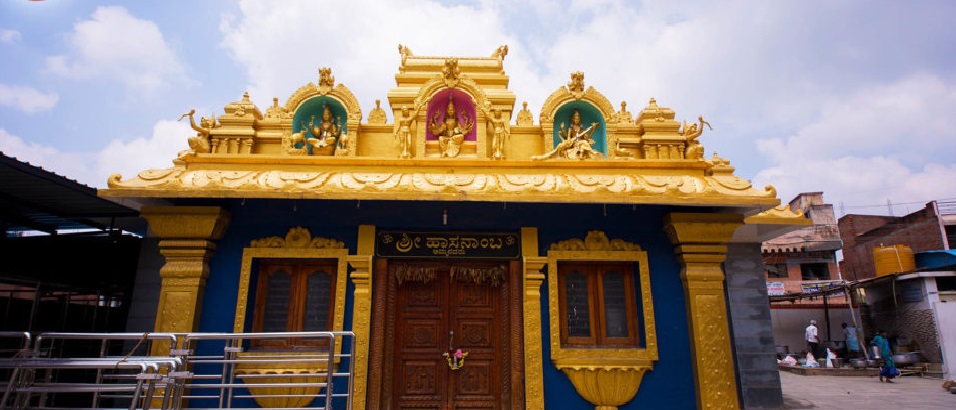
Every year during the month of October / November during deepavali time, the beautiful city of Hasan comes alive with lakh of people visiting the city and the highly revered Ma Ambe temple known as Hasanamba Temple.
And there is a reason for that. This temple is open only once a year and devotees are allowed to get darshan of Ma Hasanamba and seek blessings.
Ma Hasanamba is the presiding deity of the beautiful city of Hasan. It is believed that Hassan got its name after the presiding deity of this place, Ma Hasanamba.
With a with a host of miracles and legends surrounding this temple, it attracts lakhs and lakhs of devotees from across the country during this time.
Do watch our Hasanamba temple video on youtube:
https://youtu.be/5zK29SMeOOg
Legend of Hasanamba Temple
Once the Seven Maatrukes (Brahmi, Maheshwari, Kaumari, Vyshnavi, Varahi, Indrani, and Chamundi) were crossing the city of Hassan.
They were taken aback by the beauty of Hassan and decided to make it their home for the rest of their lives.
Ma Indrani, Ma Varahi, and Ma Chamundi chose the three wells in Devigere Honda, while Ma Maheshwari, Ma Kaumari, and Ma Vyshnavi chose the three anthills inside the temple.
Ma Brahmi chose Kenchamma's Hosakote.
Hence the city of Hassan has a very important religious significance in the region and the this temple is one the most important temples of the region.
Miracles of Shri Hasanamba Temple
Nandaa Deepa or the ghee lamp, burns through out the year, with the ghee never depleting. This is really amazing.
The anna naivedya (which is the rice offering) offered at the time of closing the door stays warm and unspoiled when the door is open again, a year later.
The bale kandu ( banana stem is called as Bale Kandu in local language ) and flowers offered to the goddess ( before closing the door ) remains fresh through out the year.
How to reach Hasanamba Temple
The temple is right in the heart of the city of Hassan, around 2 Kms from KSRTC Bus stand in Hassan.
The temple is around 2.5 Km from Hassan junction railway station
If you are driving by your own then you need to reach Hassan first which is very well connected with all the major cities of Karnataka
The temple is around 180 kms from Bengaluru
The temple is around 170 kms from Mangalore
Hasanamba temple to Chennakesava Swamy Temple belur – 38 kms
Hasanamba temple to Someswara Swamy Temple Haranhalli – 35 kms
Hasanamba temple to Sri Lakshmi devi Temple, Doddagaddavalli – 14 kms
Hasanamba temple to Iswara Temple , Arisikere– 45 kms
Temple Timings
6.00 am to 1.00 pm and 3.00 pm to 10.30 pm
Remember, the temple is only open for a few days in a year around Diwali time. So make sure if you want to visit, this time will be great.
You can check the official notification of opening dates at below link:
Mukteshwar Mahadev Temple Nanital is a sacred and primarily a Lord Shiva temple with other Hindu deities, set on a mountaintop. Mukteshwar Mahadev Temple Nanital is approximately 5500 years old…
Kempamma devi temple is one of the very powerful devi temples in the district of Tumkur ( also called as Tumkuru ), Karnataka.
The temple is located in a vilage called as Bajagaru.
Bajaguru is a Village in Tiptur Taluk in Tumkur District of Karnataka.
Bajaguru is a veru religious place and is surrounded by 4 devi temples.
Kempamma temple
Kollapuramma temple
Mulgattama temple
Ballekere Amma Temple
People visit Kempamma temple to pray for solving health related issues while Kollapuramma is famous for solving wealth related problems.
People do "madalakki seve" here.
Mulagattamma is famous for solving land related problems.
People take the sand of snake house to thier home & do the pooja's regularly and once your problem is solved then they have to return it back to the temple.
So this place is amazing and these four devi temples are very famous in this region. If you are planning to visit Tumkur, you can definitely plan to visit these temples.
Make sure that you also check the temple open timings.
How to reach Kempamma Devi Temple
To reach Kempamma Devi Temple Tumkur, you need to reach Bajagaru village. The temple is located in Bajaguru village of Tiptur taluk in Tumkuru distrrict.
Temple address:
Bajagur, Tiptur, Karnataka, India 572224
How to reach Bajaguru:
Bajaguru is about 15 kms from Tiptur. One can reach Tiptur via Tumkur from Bangalore.
By Rail
There is no railway station in Bajaguru. Near Tiptur you have 2 railway station - Tiptur railway station and Shri Sharda Nagar Railway station. From there you can take a auto to reach the temple.
By Road
Tiptur , Turuvekere are the nearby by towns to Bajaguru having road connectivity to Bajaguru. There are plenty of busses ply to Tiptur from Bangalore .
The Shirdi Saibaba temple Plano was established in 2004 and is one of the popular Saibaba temples in Plano, Texas , US. Please find the details of the temple below.…
Friends let me take you to Dasarighatta today. The famous temple of Ma Sri Sri Sri Chowdeshwari Devi, the Dasarighatta Chowdeshwari Templ is located here !
Tumkur in Karnataka is home to many famous temple and Ma Chowdeshwari Temple ( dasarighatta chowdeshwari devasthanam ) is one of them.
A very famous temple of the region is in the middle of the backwaters of shavarathi dam. The unusually tall, vertical wild date tree (eechalu) in front of the temple is a special feature here
Legend of Mata Dasarighatta Chowdeshwari Temple
It is said that hundreds of years ago, on the banks of the river Tunga in Karnataka in Raichur district, there was a kingdom called Nandavara.
As per legend, Nandavara's king was a Shakti Upasaka. The king used to rise at 4 a.m., travel to Kasi, bathe in the holy Ganges, and return to his kingdom before daylight to worship Devi at Nandavara, all with the power of the heavenly mantra Shakti.
This was his daily routine. The Maharani becoming suspicious of his absence, questioned the king about this. The king told her everything in detail.
She decided to test the king, and hence she compelled him to take her also with him. The king reluctantly accepted. The next day, he took her to Kasi along with him.
During their stay at Kasi, the queen had her monthly course. The king's mantra Shakti was lost as a result of this. The king got restless and frightened since he was unable to return to his kingdom as usual.
He observed a group of Brahmans doing Chandi Homa while travelling along the Ganga's banks, and approached them because he couldn't find a solution.
The Brahmans vowed to give the king a fourth of what they had earned as punya (good acts) by sacrificing Arghya to Lord Surya every day at the appropiate time, purifying the queen and allowing them to return to their kingdom.
The Brahmins asked the king what he would give them in return for their help. The king promised to give them land, whenever they approached him.
Thus the king got the power from the Brahmans and returned to his kingdom. But the king was never able to make use of Shakti Mantra.
Years passed. There came a terrible famine in Kasi. The Brahmans remembered the king's promise and went to Nandavara to met him. They reminded him of his promise.
However the king had completely forgotten his promise. He disrespected the Brahmans and abused them. The Brahmans were very unhappy . From that day onwards, all the efforts of the king started yielding negative results.
The Brahmans worshipped Shri Chowdeshwari and requested her to come down to Nandavara as the lonely witness for the king's promise. Devi did as they desired. The king realized his mistake. He apologised to Devi and Brahmans.
The dynasty of Brahmans thus got settled at Nandavara and came to be known as Nandavariks and Chowdeshwari became their Kul devi, she is also the family deity of Togataveeras.
There still exists a beautiful Ma Chowdeshwari Temple at Nandavara on the banks of Tungabhadra and she is being worshipped on all days of the year.
The about 300 years ago, there used to live a paleyagar named Jasavantharaya near Tiptur. He desired to extend his kingdom.
Having come to know of the powers of Mata Chowdeshwari Temple, so he went to Nandavara and prayed to her with all devotion.
Devi was pleased with his tapsaya and she appeared in front of him and asked him to ask for a boon. That is when the paleyagar revealed his desire. He requested her to follow him as a protector during all his expeditions.
Devi agreed on the condition that, she would stay permanently at a place of her choice. Paleyagar continued his expeditions and conquered kingdom after kingdom. While marching in this way, Devi came across a plain land, surrounded by beautiful dales and mountains, with lush green patches of forestland.
Devi decided to stay there and informed the Paleyagar . This place came to be known as the town of Jasavantharaya. The same Jasavantharaya town is now called Dasarighatta.
What is the speciality of Mata Dasarighatta Chowdeshwari Temple
The speciality of dasarighatta chowdeshwari devasthanam is a panchaloha idol of Mata Chowdeshwari Devi, which write backs the reply if a question is asked orally or even in mind.
The question can be asked in any language- Kannada, Hindi, English,Telugu etc.
The head of the deity is believed to write down the answers in the Kannada language on rice flour or ragi flour base.
You have to buy the ticket for each question. There is a ticket which you need to take for this ritual. The ticket price was around 100/- but you need to check the current price.
How to reach Dasarighatta
Dasarighatta is about 10 kms from Tiptur. You can reach Tiptur via Tumkur .
There are plenty of busses from Bangalore to Tiptur. From Bus stand, Auto driver will charge Rs 100/- for one way. Also city buses are available to reach Dasarighatta.
You can reach Tiptur by train. Dasarighatta is around 5km from railway station.
Dasarighatta Chowdeshwari Temple, Dasarighatta, Tiptur, Tumkur district
Shri Sadashiva Rudra Temple is a Shiva temple in Dakshina Kannada region of Karnataka, dedicated to Lord Shiva. Despite the fact that the temple's name is Sadashiva Rudra Devasthana, it is better known as the "Surya" Temple or Surya Temple Ujire.
It is one the the prominent temples of the region and is well know for offerings made of mud (idols).
If any wishes or prayers made by devotees to get rid of their troubles or for the fulfilment of their desires is fulfilled, offer an idol of mud related with their wishes (called Mannina Harake in Kannada).
And there are 2 main temples you ca say at this location. The main Shiva Linga is located between the woods, under a canopy of beautiful green trees, with no roof or walls . Harike bana is the name of the location.
While all of the pooja takes place in the second temple.
Offerings at Sadashiva Rudra Temple
So before making the offerring devotees need to do a sankalp if you are visiting the temple first time, you can only do sankalp.
Once the sankalp you have done is fulfilled then only you can go to the temple and do the offerings to the lord.
The offerings are clay Sculptures ( mud idols). These offerings are available in temple premises . These sculptures are also called as Mannina bombey ( in local language). The cost of these mud sculptors will depend on the what your offerings are.
So for example of you wished for a house and your wish is fulfilled you can offer a house shaped sculpture made up of mud.
So there is a specific mud idol associated with every wish. If you pray for a kid, after you are blessed with a kid, you will need to visit this place and offer a small cradle made of mud.
So when you visit the temple, you will find different idols like this offered by devotees there.
Why Sadashiva Rudra Temple is called Surya temple?
The temple is called as Sadashiva Rudra Devasthanam. But the temple is popularly known as surya temple ujire or the ujire surya temple.
Suryanarayana temple ujire history
So shri Suryanarayana temple ujire has a history which dates back to the 13th Century. The "BANGA" Kings governed the place at the time. The Ujire Surya temple was built with the help of the Banga Kings.
A little inscription near the Nandeeshwara Idol reveals that the temple's history dates back before the 13th century.
The origin of the name "SURYA" is has an interesting legend behind it.. Once upon a time, a woman and her son were chopping grass when they came across a stone.
As soon as she struck the stone, blood began to ooze from the stone .
The woman called out to her son, "SUREYA," because she was afraid of seeing blood from the stone.
Following the occurrence, the location was given the name SUREYA, which evolved into "SURIYA" and finally "SURYA" as it is known today.
Surya temple ujire timings
Ujire surya temple timings are from 7.30AM to 2PM and 4PM to 6.30PM only . So please note this and plan your visit accordingly.
Surya temple near Ujire is very near to Ujire bus stop and is around 6 KMs. From Ujire bus stop you can take a taxi or auto to reach the temple. The time taken will be around 15 mins from the bus stop.
Shri Sadashiva Rudra Temple or the Surya temple is quite well connected with the major cities of Karnataka like Bengaluru, Mangalore, Mysuru, Hasan etc