Ramchaura Temple – रामचौरा मंदिर हाजीपुर बिहार – यह मंदिर रामायण काल से मौजूद है
Ramchaura Mandir is one of the very famous temples located in the city of Hajipur, Bihar.
About Shri Ramchaura Mandir
Dedicated to Lord Rama, it is located at Rambhadra near Helabazar, Hajipur and is one of the must visit temples if you are in the city.
As per local legend, people say that this temple have been in existence since Ramayana period and Lord Rama is believed to have visited this place on his way to Janakpur.
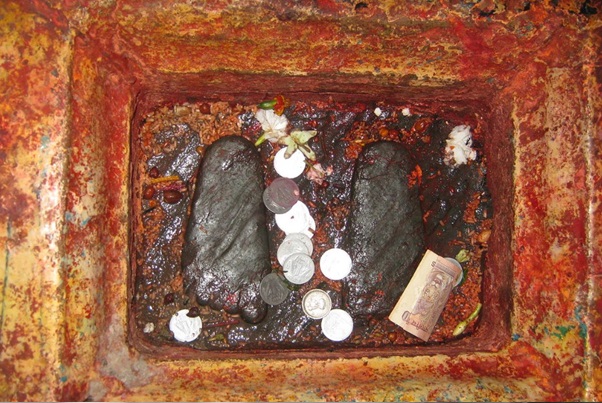
This is the place where his footprints are visible and worshiped.
The Ramchaura Mandir has tradition of celebrating Rama Navami, the birth anniversary of Rama, every year.
A small fair is also organised on the eve of Rama Navami which is very popular in the region and lakhs of people visit this fair each year.
Archeological Evidence of Shri Ramchaura Mandir
During excavation there are many objects and artifacts which were found at the site.
Archeological objects excavated from Ramchaura are kept at the Patna Museum.
Chaura is a Bhojpuri language word which means orchid and Ramchaura Mandir refers to the orchid which was visited by Lord Rama.
Presiding Deity
The presiding deity of the Ramchaura Mandir is 'Lord Rama'.
Rama Navami is celebrated with full zeal and enthusiasm at this temple and is one of the most important festivals to be celebrated here.
It is a the festival, to celebrate the birth of Lord Rama.


Lord Rama is the 7th incarnation of the Dashavatara of Vishnu. The SreeRama Navami festival falls in the Shukla Paksha on the Navami, the ninth day of the month of Chaitra in the Hindu calendar.
Thus it is also known as Chaitra Masa Shuklapaksha Navami, and marks the end of the nine-day Chaitra-Navratri celebrations.
Significance of a Ramchaura Mandir
Lord Shri Rama was the legendary king of Ayodhya. It is said that during his childhood days he visited this place and had got his Mundan done here.
Mundan is a ceremony where the head hair is shaven first time in a persons life.
The temple hence was made on his footprints and this place has great religious value for the Hindus.
This footprint is at the altitude of 45 mts from ground. Bael (Aegle marmelos) is taken as prashad on the eve of Rama Navami.
"Bari Sangat" and "Chhoti Sangat" is also situated near this pious place. During ancient period many Saints, Mahatmas and Yogi used to visit these "Sangats" and offered prayer.
A popular fair is also organised here on the occasion of Rama Navami every year.
You may also like: The Pataleshwar Mandir, Hajipur,Bihar | Pataleshwar Mandir History
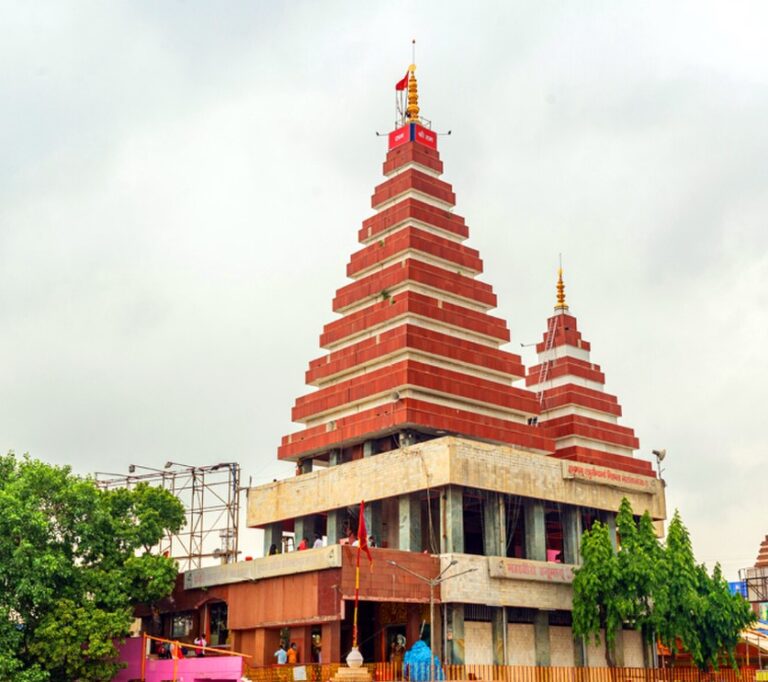
Mahavir Mandir Patna - The temple is located near the Patna Junction. Mahavir Mandir Patna is one of the largest and oldest temples in the state of Bihar.
Lord Hanuman is the presiding diety of the temple. Bihar's Patna is home to the this famous Mahavir temple. Each day, thousands of worshippers flock here to offer prayers and ask for Lord Hanuman's blessing.
It is also known as the "Manokamana Temple" since it is believed that devotees' requests are answered in full. This explains why there are more and more devotees visiting the shrine.
This holy temple is devoted to Lord Hanuman. This is one of the most famous Hanuman temple in Bihar. It is the second most visited religious destination in all of North India as a result of the millions of devotees that flock here to ask for blessings and make prayers.
Mahavir Mandir Patna History
Itn is said that this Mahavir temple in the state of Bihar has been around for all time. People still don't know the exact date of the first establishment. In 1947, Mahavir temple Patna became well-known.

But according to the historic facts and traditions is it said the Mahavir Mandir Patna was originally established by Swami Balanand. He was an ascetic scent in 1730 A.D. The Temple was rebuilt at the time of Independence.
But in general people believe that this temple is Patna has been in existence foreever.
Mahavir Mandir Patna has two idols of Hanumanji standing side by side in the sanctum.
Significance of Mahavir Mandir Patna
The entrance of the Mahavir Mandir Patna is facing north.
At the entrance of the temple you will find place to keep shoes, clean water for washing feet and hand.
Mahavir Temple is a complex of temples, not just a single temple. There are stairs on an elevated platform to the left of the entryway that go to Garbhagriha. Lord Hanuman's sanctum sanctorum is this Garbhagriha.
There is again a passage which houses Lord Shiva. This passage has a ritual significance for the devotees who come here to offer prayer and seek blessings.
The first floor of the Mahavir Mandir Patna consists of four sanctum sanctora of Deities. The first one is of Lord Rama. The second one is of Lord Krishna delivering the sermon to Arjun. Goddess Durga is situated next to Lord Krishna. And last but not the least, Lord Shiva meditating with his wife Goddess Parvati and Nandi, the holy ox.
The holy floating Ram Setu Shila is also placed on the ground.This Ram Setu Shila is kept in a glass container. It weighs around 15kgs whereas its volume is around 13,000mm.
You may also like: https://mytempletrips.in/chandika-sthan-munger-bihar/
The Pataleshwar Mandir is located in Hajipur, Bihar, India's Vaishali district. It is situated on Jadhua Road in Hajipur and is devoted to Lord Shiva.
Shri Pataleshwar mahadev mandir is said to have existed since the beginning of time, and according to local tradition, it is said that Lord Shiva has himslef established this temple here.
Looking for pooja items for home: click here - amazing discount
The history of Pataleshwar Shiv Mandir is interesting. King Siddharaj Solanki of Solanki era was born at this place. In the festival, Queen Minaldevi ordered that a well should be dug for the thirsty travelers. The Shivalinga originated while digging the well and only then later the Pataleshwar temple was constructed in the shape of a well.
It was aptly christened Patal-eshwar, which means ‘Lord under the ground’; The actual temple built in the 8th century AD lies 40 feet below the ground, while the new structure on top has only been recently added.
Many of the original stones that were used to construct the temple have inscriptions on them that depict various symbols for the snakes that adorn Lord Shiva's neck.
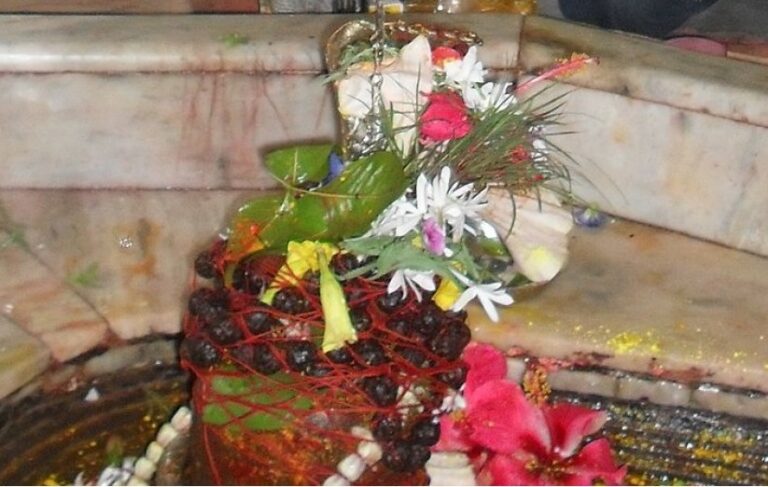
It is a Swayanbhu Shivlinga (self-created), and people think it spontaneously sprang from the ground. A lion is said to have roared twice a day, in the morning and in the evening, close to the temple in ancient times.

A stunning statue of the serpent god Nandi is also present in front of the temple. Many saints frequently come here to reflect.
Other legends behind shri Pataleshwar Mandir, Hajipur
It is said that during the exile period of Pandavas, Arjun meditated hard for lord Shiva. Pleased with his dedication, lord Shiva appeared himself before Arjun and asked him to ask for a boon.
Arjun prayed lord Shiva to stay at this place. Lord Shiva accepted his prayer and told him that he will stay there as shiv ling and any one who worships him and pours water on the Shivling will be blessed and fulfilled with all his wishes.
Looking for pooja items for home: click here - amazing discount
The place where Lord Shiva was standing the temple was constructed. Since the shiv ling ins syambhu and came out from beneath the earth, the place is called as Pataleshwar Mahadev.
It is said that every year on Shivratri the Shivlinga increases by an inch.
That is why Pataleshwar Mahadev shivling is unique in the world and has become the centre of religious faith for Hindus.
you will also like: Chandika Sthan, Munger, Bihar
One of the famous cave temples in Bihar, Chandika Sthan is situated in Munger, in Bihar on the bank of river Ganga, among the Vindhya mountain in a cave.
Chandika Sthan is one of the fifty one Shakti Peethas, places of worship consecrated to the goddess Shakti.
The temple is situated at the Northeast corner of the city of Munger.

The famous shaktipeetha temple is just two kilometers away from the Munger town.
Being a Siddhi-Peetha, this temple is considered to be one of the most sacred and sanctified temples.
Legend behind Chandika Sthan Munger
The Chandika Sthan Temple is one of the Shakti Peetha's, the divine shrine of Shaktism.
The mythology of Daksha Yaga and Sati’s self-immolation and Shiva carrying the corpse of Sati Devi is the story of origin behind the Shakti Peetha shrines. It is believed that Sati Devi’s left eye has fallen here.
According to the legend, it was done to spare the world from Lord Shiva's wrath while he travelled with Sati's corpse.
According to the same tale, the left eye of the Sati fell in Munger, which later turned into a temple dedicated to the Divine Mother Chandi. According to the conventional wisdom of the local folklore, Chandika Sthan is renowned among the several Shakti peethas for its ability to treat eye problems.
Another legend relating this temple is about King Karna of the ancient kingdom of Anga. Karna used to worship Chandi Mata on a daily basis. Raja Karna used to worship Maa daily, he used to daily come in mandir and jump into boiling ghee, according to saints, Maa used to give Darshan to Raja Karna and made his dead body alive.
In return, the Goddess gave him 11/4 pounds (equivalent to 50 kilogrammes) of gold to give to the needy and downtrodden at Karanchaura, which is now a local name for the area.
Shakti Peeth Maa Chandika Sthan is a historical site that is located in the eastern part of the city of Munger, along the banks of the Ganga, in a cave among the Vindhya Mountains.
The place where the temple is situated, is the place where left eye of Maa had fallen.
How to reach Chandika Sthan temple
Chandika Sthan is located approx 1 km from ITC Ltd, Basudeopur, Munger
- Nearest railway station is Munger Junction
- Nearest airport is Patna airport
There are cab and autos available from railway station as well as airpot for the mata How to reach Chandika Sthan temple.
you may also like: Devi Patan Temple – Tulsipur – Uttar Pradesh
Dev surya mandir Aurangabad Bihar - Dedicated to the Surya devata, Sun temple of Deo is one of the most popular temples in Bihar.
So what is unique about this temple. This is the sun temple which faces west , the setting sun and not the usual raising Sun.
Dev Surya Mandir kahan hai?
The temple is located in Deo Town, Aurangabad.
Deo is located 10-km to the southeast of Aurangabad.
Deo mandir aurangabad architecture
Dev Surya Mandir Aurnagabad is one of the remarkable and notable temple and religious place in Bihar.
The Sun temple of Deo is a 100-ft tall structure, with an umbrella-like top.
The tradition of worshipping the Sun God and bathing in his Brahma Kund dates back to King Ayel's reign.
The temple is both old and well-constructed. The temple architecture is a mix of nagara design and other contemporary designs like Vesara and Dravidian Architecture.
The primary structure is a shikhara, a pyramid-shaped stone structure with ornate carvings.
The frontal part and the courtyard were constructed later.
There are three idols in the sanctum that are not the original presiding god (Vishnu, Surya, and Avalokitesawara).
You will find some broken idols. There arfe three damaged idols which are preserved outside the main sanctum in the front hall part, as it is not customary to worship a broken deity.
Surya (the Sun God) sculpture with seven horses and one Uma- Maheshwara statue is one of the broken sculptures, while Vishnu is the other.
You will also fins a Shivalinga and a lord Ganesha idol and an ancient inscription stone is installed in the interior of the temple.
This temple is considered very auspicious and during the festival of Chatth puja and Adra Nakshatra tithi on Sundays, you will find lot of devotees here.
The Surya Kund is about one km away from the main temple.
The two tanks on either side of the road, known as Rudra Kund (left) and Surya Kund (Right) are believed to have medicinal properties and is is said that a dip in these lakes cure leprosy and other acute ailments
Deo surya mandir history
Below is the legend behind the Dev surya mandir Aurangabad in Bihar.
It is believed that Lord Vishwakarma was once entrusted with constructing temples in a single night. And hence the temple was constructed in one night!
But the temple you see today, is believed to have been built by Bhairvendra Singh, a Chandravanshi king of Umga.
Dev surya mandir is among the rarest and oldest of Sun temples of India.
There is a shilalekha outside of the temple , on which a shloka is inscribed, which has been taken from the book of Aryabhatta that says that on the fifth day of Magha month’s shukla paksha, Thursday, Eila’s son Aiel established this Sun temple in Tretayuga twelve lakh sixteen thousand years ago.
Manu had a daughter named Eila. According to folklore, while hunting in the forest here, King Aiel, who was suffering from leprosy, discovered that the muddy water of a pit cured him of the sickness.
He dreamt of Brahma, Vishnu and Mahesh statues in the pit and hence ordered to install them there.
So a temple was built at this place.
People say that these three statues depict the eleventh form of Sun God out of twelve.
Sun God is depicted as Brahma in Udayakal, as Mahesh in Madhyakal and as Vishnu at Astakal. Below the central statue of Sun God as Mahesh, a chariot is depicted being pulled by seven horses and Arjun as charioteer.
The holy land of Deo is also a historical site where tourists will find the ruins of ancient forts built primarily during the reign of Raja Jagannath Singh.
Deo, during the period of his kingdom, had blossomed into a major city. His primary administrative centre was in "Kanchanpur" hamlet, some 3-4 kilometres south of Deo.
Aadditional tourist attractions include forests and Baba Siddhanath's temple, which is located near the settlement of Bara Khurd on the bodla mountain.
Hope you liked this information. Do keep visiting mytempletrips for more information on such beautiful temples around us.
Please do share us on social media. You can find us at:
You may also like: Konark Sun Temple – surya mandir- Puri – Odisha
Vishnupad temple gaya, is a historic Hindu temple in Gaya, Bihar.
Lord Vishnu is the presiding deity of this temple.
A footprint of Lord Vishnu, known as Dharmasila, etched into a chunk of basalt marks the location of this temple near the Falgu River.
Lord Vishnu's 40-centimeter footprint is engraved in solid granite and surrounded by a silver-plated basin inside the Vishnupada Mandir.
The construction date of the Vishnupada temple is unknown and it is believed that Lord Rama along with Ma Sita had visited this place.
Devi Ahilya Bai Holkar, the ruler of Indore, rebuilt the current edifice on the banks of the Falgu river in 1787.
Gaya vishnupad temple photo

History of Vishnupad temple Gaya
Gayasura, a demon, once performed a penance and asked for a boon that everybody who saw him would attain salvation (Moksham).
Because salvation is obtained by being righteous during one's lifetime, individuals began to attain it more easily.
To prevent immoral people from attaining Moksha Lord Vishnu asked Gayasura to go beneath the earth and did so , by placing his right foot on the asura's head.
Lord Vishnu's footprint remained on the earth's surface after he pushed Gayasura beneath it, and we still see it today.
Shankam, Chakram, and Gadham are among the nine symbols found on the footprint.
These are thought to be lord's weapons.
Gayasura, who had been shoved into the ground, begged for food. Lord Vishnu bestowed upon him the gift that someone would offer him meals every day.
Those who do so will have their souls accepted into heaven. It is said that if Gayasura does not receive nourishment for a day, he will emerge and till today different parts of country people pray for the welfare of the departed souls and offer food, feeding Gayasura.
Within the temple stands the immortal , Akshayavat tree , where the final rituals for the dead take place.
There is another legend behind the Vishnupad temple !
If you notice Falguni river, there is no much water in the river at Gaya, though apparently, there is water upstream as well as downstream.
This is apparently because of a curse on the river.
According to legend, Lord Rama travelled to Gaya with his siblings and Goddess Sita to do the sacred ceremonies for his father, Dasaratha.
Ma Sita was seated on the riverbanks, while the brothers were bathing. King Dasaratha , then emerged from the sand and claiming to be hungry , requested for the Pindanam.
Mata Sita requested that he wait till his boys returned before she prepared the traditional Pindam of rice and tilam for him.
King Dasaratha refused to wait and demanded that she give him pindams made from the sand she was holding.
She had no choice but to grant him the Pindam he requested in the presence of five witnesses: the Akshaya Vatam, the Falguni River, a cow, a Tulsi plant, and a Brahmin.
Lord Rama came there soon after and began the ceremonies. Apparently, in those days, the ancestors would come in person to collect their portion, and when King Dasaratha did not show up, they were perplexed.
Mata Sita then informed them of what had occurred, but Lord Rama could not believe his father would take sand pindams.
Sita now stated her witnesses and requested that they inform Rama of the truth.
Only the Akshaya Vatam stood by her and stated the truth, while the others lied in an attempt to support Rama's side.
Being angry with their behavior, Ma Sita cursed them all, saying that the Falguni river would no longer have water at Gaya, and that the Cow would no longer be worshipped from the front and that there would be no more Tulsi plants at Gaya, and that the Gaya Brahmins would never be satisfied, that they would always be hungry and crave more and more.
She then blessed the Akshaya Vatam, promising that everyone who came to Gaya would also conduct the Pinda pradaanam there.
A hence a Pind Daan done at Gaya on Panchakroshi Gayakshetra is believed to guarantee a safe passage for the souls of twelve generations.
How to reach Vishnupad temple ?
Vishnupad temple Address : Chand Chaura, Gaya, Bihar, 823001
If you are coming by train : Gaya railway station to vishnupad temple is 4 KM away.
If you are travelling by Air : 12 KM away from Gaya Airport
Check out below trains for Gaya ( Please confirm the train nos and timings on IRCTC website ):
- DIKSHABHOOMI EX (Train NO: 11045)
- CHAMBAL EXP (Train NO: 12175)
- KOLKATA RAJDHNI (Train NO: 12301)
- HWH JU EXPRESS (Train NO: 12307)
- HWH DLI KLK MAI (Train NO: 12311)
- SDAH RAJDHANIEX (Train NO: 12313)
- KOAA AGC EXPRES (Train NO: 12319)
- HWH MUMBAI MAIL (Train NO: 12321)
- HWH NDLS EXPRES (Train NO: 12323)
- HWH LKU EXP (Train NO: 12353)
- DURGIANA EXP (Train NO: 12357)
- RNC JANSHATABDI (Train NO: 12365)
- HWH JSM EXP (Train NO: 12371)
- POORVA EXPRESS (Train NO: 12381)
- GAYA MS EXPRESS (Train NO: 12389)
- MAHABODHI EXP (Train NO: 12397)
- RNC NDLS RAJ EX (Train NO: 12439)
- HLZ ANVT WKLY S (Train NO: 12443)
- BKN KOAA SUP EX (Train NO: 12495)
You may also like: Baba Bhootnath Temple Lucknow